


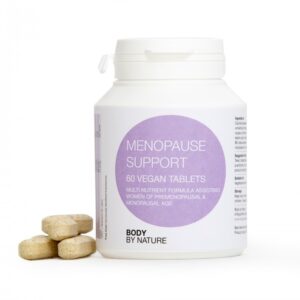
The menopause conversation in the UK has shifted dramatically. HRT has been rehabilitated — its safety profile reappraised, its benefits more openly discussed, its prescription rates rising after decades of unnecessary fear. For many women, HRT is the right choice and the evidence supports it.
But not every woman wants it. Not every woman can take it. And for those looking at natural approaches, the supplement market is a confusing place — full of bold claims, varying quality, and little guidance on what the evidence actually shows.
This is that guidance. Practical, specific, and honest about what works and what doesn’t.
What Menopause Does to the Body
Menopause marks twelve consecutive months without a menstrual period — typically occurring between ages 45 and 55 in UK women, with the average age at 51. What drives it is the sustained decline and eventual cessation of oestrogen and progesterone production by the ovaries.
That hormonal withdrawal has wide-reaching effects. Hot flushes and night sweats affect up to 80% of menopausal women. Sleep disruption, mood changes, and brain fog follow. Joint pain increases as oestrogen’s anti-inflammatory role diminishes. Bone density begins declining at an accelerated rate. Vaginal and urinary tissue changes occur. Cardiovascular risk rises.
None of this is inevitable or untreatable. Supplements don’t replace oestrogen. But several work through different pathways to meaningfully reduce specific symptoms and protect long-term health during this transition.
Phytoestrogens: Nature’s Oestrogen Mimics
Phytoestrogens are plant-derived compounds that weakly bind to oestrogen receptors in the body. They don’t replicate the potency of endogenous oestrogen — but at menopause, when oestrogen levels fall significantly, even a mild oestrogenic effect can reduce symptom burden.
The best-studied phytoestrogens for menopausal symptoms come from two sources.
Red clover isoflavones — a rich source of formononetin and biochanin A, which the body converts to oestrogenic compounds. A 2007 Cochrane review found red clover isoflavone supplementation reduced hot flush frequency significantly compared to placebo. A dose of 40–160mg of isoflavones daily delivers meaningful results for most women within 8–12 weeks.
Soy isoflavones — particularly genistein and daidzein. Japanese women, whose traditional diets contain significantly more soy than Western diets, report substantially lower rates of menopausal hot flushes. Multiple clinical trials confirm that soy isoflavone supplementation reduces hot flush frequency and severity in Western women with low habitual soy intake.
Phytoestrogens work best for vasomotor symptoms — hot flushes and night sweats. Their effect on mood, cognitive function, and bone density is more modest but present.
Women with oestrogen receptor-positive breast cancer history should discuss phytoestrogen supplementation with their oncologist before starting.
Magnesium: Sleep, Mood, and the Menopause Overlap
Poor sleep is one of the most disruptive and underaddressed symptoms of menopause. Night sweats interrupt sleep architecture. Declining oestrogen and progesterone alter the brain’s sleep regulation. Anxiety increases. The result is a significant proportion of menopausal women operating on chronically poor sleep — with all the cognitive, emotional, and physical consequences that follow.
Magnesium supports melatonin production, reduces the hyperactivation of the HPA stress axis, and promotes GABA activity — the brain’s primary calming neurotransmitter. Taking 300–400mg of magnesium glycinate in the evening directly supports sleep quality, reduces anxiety, and helps regulate the mood instability that oestrogen withdrawal can produce.
For UK women specifically — where magnesium insufficiency is common across the general population — this is one of the most immediately impactful supplements for menopause quality of life.
Vitamin D and Calcium: Protecting Bone in the Critical Window
The first decade after menopause represents the period of fastest bone density loss in a woman’s life. Oestrogen normally suppresses bone resorption — the process by which bone breaks down. Without it, resorption accelerates and bone mineral density falls rapidly.
Vitamin D and calcium work together to slow this decline. Vitamin D drives calcium absorption from the gut. Calcium provides the mineral substrate for bone maintenance. Neither works adequately without the other.
UK guidelines recommend 10mcg (400 IU) of Vitamin D daily for all adults — but evidence for bone protection in postmenopausal women supports higher doses closer to 800–1,000 IU daily, particularly for women with low sun exposure or confirmed deficiency. Pair this with 700–1,200mg of calcium daily from combined dietary and supplemental sources.
Omega 3: Mood, Joints, and Cardiovascular Protection
Oestrogen exerts a protective effect on cardiovascular tissue. Its withdrawal at menopause removes that protection and increases cardiovascular risk — making the post-menopausal years a critical period for heart health intervention.
Omega 3 fatty acids address this directly. EPA and DHA reduce triglycerides, lower blood pressure, reduce arterial inflammation, and support endothelial function — all mechanisms relevant to the elevated cardiovascular risk that follows menopause.
Beyond heart health, omega 3 reduces the joint pain that many women notice worsening after menopause as oestrogen’s anti-inflammatory contribution declines. It also supports the mood regulation pathways — serotonin and dopamine signalling — that oestrogen previously supported, providing a degree of neurological buffer during the transition.
Ashwagandha: Stress, Cortisol, and Hormonal Balance
Menopause and chronic stress interact in a particularly damaging way. Cortisol — the primary stress hormone — competes with progesterone for receptor sites and further disrupts the already-declining hormonal environment of menopause. High cortisol also worsens sleep, accelerates bone loss, and amplifies hot flush frequency.
Ashwagandha directly lowers cortisol through well-evidenced mechanisms. Clinical trials show it improves sleep quality, reduces anxiety, and supports hormonal balance in stressed adults. For menopausal women managing high stress alongside hormonal transition, ashwagandha addresses both simultaneously.
Building a Practical Menopause Supplement Stack
The supplements for menopause UK women report as most impactful tend to combine hormonal support with systemic protection:
- Red clover or soy isoflavones — for hot flushes and vasomotor symptoms
- Magnesium glycinate — for sleep, mood, and stress resilience
- Vitamin D3 with K2 — for bone protection and immune function
- Calcium — as a complement to Vitamin D for bone mineral density
- Omega 3 — for cardiovascular protection, joint support, and mood
- Ashwagandha — for cortisol regulation and sleep quality
Introduce one or two at a time rather than everything at once. This allows you to observe which supplements deliver the most benefit for your specific symptom profile and adjust accordingly.
Menopause is not something to simply endure. With the right nutritional support, it’s something to navigate with genuine tools — and on your own terms.
Body by Nature Supplements provides each of these nutrients in quality formulations — so you can build a menopause protocol grounded in evidence, not guesswork.