


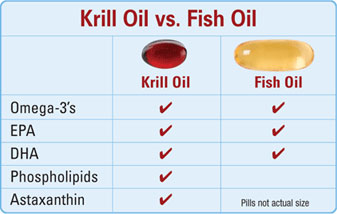
Both deliver omega 3. Come from the sea and both carry strong reputations in the supplement world.
But krill oil and fish oil are not interchangeable. They differ in how they deliver EPA and DHA to your cells, how well they absorb, how stable they are, and what other compounds they bring along. Understanding those differences helps you choose the option that suits your body, your goals, and your budget.
Here’s what the evidence actually says.
What They Are and Where They Come From
Fish oil comes from the fatty tissue of oily fish — salmon, mackerel, sardines, anchovies. Manufacturers extract and concentrate the oil, then encapsulate it. The result is a high-dose source of EPA and DHA in triglyceride or ethyl ester form.
Krill oil comes from Antarctic krill — tiny crustaceans that sit near the base of the marine food chain. Because krill feed directly on algae, they accumulate omega 3 before the fish do. Krill oil delivers EPA and DHA predominantly in phospholipid form, alongside a naturally occurring antioxidant called astaxanthin.
Both supply the same essential fatty acids. The difference lies in the structure, the accompanying compounds, and what that means for the body.
Absorption: Where Krill Oil Has a Genuine Advantage
This is the most significant practical difference between the two.
Fish oil delivers EPA and DHA in triglyceride form. The body absorbs triglycerides through the lymphatic system before they enter the bloodstream. This process requires fat co-ingestion to work efficiently — which is why taking fish oil with food makes such a measurable difference to absorption.
Krill oil delivers EPA and DHA in phospholipid form. Phospholipids are the same molecular structure the body uses to build cell membranes. The gut recognises and absorbs them more directly — via the portal vein rather than the lymphatic system — and without the same requirement for co-ingested fat.
Multiple studies show that krill oil achieves comparable or higher EPA and DHA blood levels at lower doses than fish oil. A 2011 study published in Lipids found that krill oil raised plasma EPA and DHA levels as effectively as fish oil despite delivering a significantly lower total omega 3 dose.
In practical terms: you may need fewer capsules of krill oil to achieve the same cellular omega 3 effect as a higher-dose fish oil supplement.
Astaxanthin: Krill Oil’s Unique Advantage
Krill oil contains astaxanthin — a carotenoid antioxidant responsible for the distinctive red pigment of krill and flamingos. This compound doesn’t appear in standard fish oil.
Astaxanthin matters for two reasons.
First, it protects the omega 3 fatty acids in krill oil from oxidation. EPA and DHA are highly unsaturated fats — they oxidise readily when exposed to light, heat, and air. Astaxanthin acts as a natural preservative within the oil itself, keeping it stable from extraction through to digestion. This directly addresses one of fish oil’s primary quality problems.
Second, astaxanthin has its own well-documented health benefits. Research links it to reduced oxidative stress, improved skin health, reduced exercise-induced inflammation, and cardiovascular protection. Krill oil delivers both omega 3 and this additional antioxidant in a single capsule.
Stability: A Meaningful Practical Difference
Fish oil oxidises. This is a known industry challenge. Oxygen, light, and heat degrade the EPA and DHA content over time, generating fishy odours and reducing potency. Well-manufactured fish oil products address this through nitrogen-flushed packaging and rapid processing. But the challenge remains inherent to the product.
Krill oil oxidises significantly more slowly. The astaxanthin content provides natural antioxidant protection that fish oil simply doesn’t have. Krill oil typically carries a longer shelf life and shows lower oxidation markers at the point of consumption.
For the fishy burp problem specifically — covered in our dedicated fish oil article — krill oil capsules generally cause less aftertaste. The phospholipid structure, the natural astaxanthin, and the slower oxidation all contribute to a cleaner experience.
Where Fish Oil Still Wins: Dose and Cost
Krill oil’s superior absorption means smaller doses deliver comparable results. But fish oil still wins on raw omega 3 concentration per capsule.
Standard fish oil capsules routinely deliver 500–1,000mg of combined EPA and DHA. Krill oil capsules typically provide 100–300mg. For people targeting high therapeutic doses — 2,000–4,000mg of EPA and DHA for cardiovascular or triglyceride management — fish oil remains the more practical and economical route.
Krill oil also costs significantly more than fish oil for equivalent omega 3 intake, even accounting for the absorption advantage. For budget-conscious supplementers, high-quality fish oil taken correctly — with food, stored properly, from a reputable oxidation-tested source — remains excellent value.
Sustainability: A Question Worth Asking
Antarctic krill represents one of the largest biomasses on earth and currently faces lower individual fishing pressure than most commercial fish species. The krill fishery operates under strict international regulation through CCAMLR — the Commission for the Conservation of Antarctic Marine Living Resources.
That said, krill sit at the base of the Antarctic food chain. They are a primary food source for whales, penguins, and seals. As demand for krill oil grows, sustainability monitoring matters increasingly.
Look for krill oil products certified by the Marine Stewardship Council (MSC) or Friend of the Sea. The same principle applies to fish oil — always choose products sourced from certified sustainable fisheries.
Which Should You Choose?
Neither is universally superior. The right choice depends on your circumstances.
Choose krill oil if you struggle with fishy aftertaste from fish oil, you want the additional astaxanthin benefit, you prefer a smaller daily capsule count, or you have digestive issues that impair fat absorption.
Choose fish oil if you need higher therapeutic doses for cardiovascular or anti-inflammatory goals, you want the best value per gram of EPA and DHA, or you already tolerate fish oil well with no side effects.
Both deliver meaningful omega 3 benefit. Both outperform no supplementation by a significant margin.
Body by Nature Supplements provides high-quality options across both omega sources — so you can choose the right fit for your needs, with confidence in what’s inside every capsule.