


Your thyroid is small. It sits at the base of your neck, roughly the size of a butterfly. But its influence over your body is enormous.
The thyroid produces hormones that regulate metabolism, body temperature, heart rate, energy levels, mood, and brain function. When it underperforms — a condition called hypothyroidism — almost every system in the body slows down. When it over-performs, everything accelerates out of control.
Thyroid dysfunction affects an estimated 1 in 20 people in the UK, with women far more commonly affected than men. Many more live with suboptimal thyroid function that never reaches a clinical diagnosis but quietly drains their energy, mood, and metabolic health every day.
Nutrition plays a direct role in thyroid function. Several specific nutrients are essential for producing, converting, and activating thyroid hormones. Deficiency in any one of them can impair the entire system.
How Thyroid Hormones Actually Work
Understanding which nutrients matter starts with understanding the process they support.
The thyroid produces two main hormones: T4 (thyroxine) and T3 (triiodothyronine). T4 is the storage form. The body converts it into T3 — the active form that cells actually use — primarily in the liver and kidneys. T3 then enters cells and drives metabolic activity.
This conversion step is where many people run into problems. Even if the thyroid produces adequate T4, poor conversion to T3 leaves the body functionally under-supplied. Several nutrients govern this conversion process directly.
Iodine: The Non-Negotiable Foundation
Iodine is the raw material the thyroid uses to manufacture its hormones. Without iodine, hormone production stops.
Each molecule of T4 contains four iodine atoms. Each molecule of T3 contains three. The thyroid actively concentrates iodine from the bloodstream because it needs it in such significant quantities.
Iodine deficiency remains the leading cause of preventable thyroid disorders worldwide. In the UK, intake has declined over recent decades — partly due to reduced dairy consumption, as milk is one of the primary dietary sources. Pregnant women, those following vegan or dairy-free diets, and people with restricted food intake face the greatest risk.
Supplementing with iodine requires care. Both deficiency and excess impair thyroid function. Stick to doses within the recommended range — 150mcg daily for adults — rather than high-dose iodine products, unless directed by a doctor.
Selenium: The Conversion Catalyst
Selenium is arguably the most critical nutrient for thyroid hormone conversion. The enzymes that convert T4 into active T3 — called deiodinases — depend entirely on selenium to function.
Without adequate selenium, T4 accumulates unused while active T3 falls short. The thyroid gland also contains the highest concentration of selenium per gram of any organ in the body, reflecting how central it is to thyroid protection and function.
Studies consistently show that selenium supplementation improves thyroid hormone levels, reduces thyroid antibodies in autoimmune thyroid disease (including Hashimoto’s), and lowers levels of thyroid peroxidase antibodies — the marker of autoimmune attack on the gland.
Brazil nuts are the richest dietary source of selenium — just two or three per day can meet requirements. But for people with absorption issues or consistently low intake, a selenium supplement at 100–200mcg per day delivers reliable, targeted support.
Zinc: Supporting T4 to T3 Conversion
Like selenium, zinc plays an important role in the conversion of T4 to T3. It also supports the production of TSH — the pituitary hormone that signals the thyroid to produce hormones in the first place.
Low zinc levels associate strongly with hypothyroid symptoms, even in people whose standard thyroid blood tests appear normal. Zinc deficiency also impairs the sensitivity of thyroid hormone receptors, meaning cells respond less effectively even when T3 levels look adequate on paper.
Supplementing with zinc at 15–25mg per day addresses this gap and supports thyroid signalling across multiple pathways.
Vitamin D: The Immune and Thyroid Regulator
Thyroid disorders — particularly autoimmune conditions like Hashimoto’s thyroiditis and Graves’ disease — involve immune system dysregulation. Vitamin D plays a central role in keeping that immune response balanced.
Studies consistently find lower Vitamin D levels in people with autoimmune thyroid disease compared to healthy controls. Correcting Vitamin D deficiency reduces thyroid antibody levels and improves immune tolerance of the gland.
Beyond its immune role, Vitamin D receptors exist throughout the thyroid itself. Vitamin D directly influences thyroid cell function and hormone synthesis. Given how widespread deficiency is across the UK population, this is one of the simplest and most impactful interventions available.
Magnesium: The Quiet Enabler
Magnesium supports several steps in thyroid hormone synthesis and is required for the conversion of T4 to T3. It also regulates the stress hormone cortisol — chronically elevated cortisol directly suppresses thyroid function by reducing T4 to T3 conversion in the liver.
Many people with hypothyroid symptoms also experience anxiety, poor sleep, and high stress. Magnesium addresses all of these simultaneously, making it a valuable part of any thyroid health protocol.
Putting It Together
No single nutrient fixes a struggling thyroid. But deficiencies in iodine, selenium, zinc, Vitamin D, and magnesium each impair the system in distinct, measurable ways. Addressing them all creates the nutritional environment the thyroid needs to produce, convert, and deliver its hormones effectively.
If you suspect thyroid dysfunction, get your levels tested by your GP — including T3, T4, TSH, and thyroid antibodies. Use nutritional support alongside, not instead of, medical guidance.
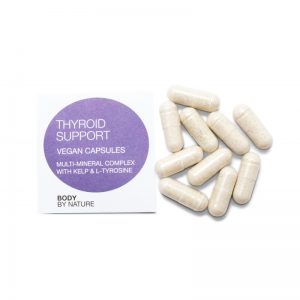
Body by Nature Supplements provides high-quality, properly dosed formulations of each nutrient discussed here — built for people who take their health seriously.