

Iron deficiency is the most common nutritional deficiency in the world. Among vegans, it’s even more prevalent — and more frequently misunderstood.
This isn’t an argument against plant-based eating. A well-planned vegan diet delivers extraordinary health benefits. But iron is one area where plants consistently fall short — not because vegan foods lack iron, but because of how the body absorbs it.
Understanding the difference changes everything about how you approach iron as a vegan.
Two Types of Iron: Why the Source Matters
Not all dietary iron behaves the same way inside the body.
Haem iron comes from animal sources — red meat, poultry, fish. The body absorbs it directly and efficiently, at rates between 15% and 35% of the amount consumed. The gut absorbs it regardless of what else you eat alongside it.
Non-haem iron comes from plant sources. Absorption rates sit between 2% and 20% — significantly lower. More importantly, non-haem iron absorption fluctuates dramatically depending on what you eat alongside it. Some foods boost absorption. Others block it almost entirely.
Vegans rely exclusively on non-haem iron. That makes the quality of food combinations, cooking methods, and supplementation strategy far more important than it is for meat eaters.
The Best Plant-Based Iron Sources
Vegan diets can deliver reasonable amounts of dietary iron. The challenge is getting it absorbed, not just consumed.
The highest plant-based iron sources include:
- Legumes — lentils, chickpeas, kidney beans, black beans (3–6mg per cooked cup)
- Tofu and tempeh — particularly firm tofu (2–3mg per 100g)
- Seeds — pumpkin seeds, hemp seeds, sesame seeds (up to 4mg per 30g serving)
- Dark leafy greens — spinach, Swiss chard, kale (though spinach’s oxalate content reduces absorption significantly)
- Quinoa and fortified grains — a useful contribution when consumed regularly
- Dried fruit — apricots, figs, raisins (convenient but calorie-dense)
- Dark chocolate — a surprising source at 3–5mg per 30g
These foods provide iron in meaningful quantities. But quantity on the label and quantity absorbed by the body are two very different numbers.
What Blocks Non-Haem Iron Absorption
Several compounds found commonly in plant foods directly inhibit iron absorption. Knowing them helps you avoid inadvertently undermining your own iron status.
Phytates — found in grains, legumes, nuts, and seeds — bind to iron in the gut and prevent absorption. Soaking, sprouting, and fermenting these foods reduces phytate content significantly.
Oxalates — found in spinach, beetroot, and Swiss chard — similarly bind iron and block absorption. Spinach contains impressive quantities of iron on paper, but its high oxalate content makes it a poor iron source in practice.
Polyphenols — found in tea, coffee, red wine, and some herbal teas — significantly reduce non-haem iron absorption when consumed with meals. A cup of tea taken with or immediately after a meal can reduce iron absorption from that meal by up to 60%.
Calcium — when consumed in high quantities alongside iron, it competes for the same absorption pathway. Avoid taking calcium supplements and iron-rich foods at the same meal.
What Boosts Non-Haem Iron Absorption
Vitamin C is the single most powerful enhancer of non-haem iron absorption. Consuming 100–200mg of Vitamin C alongside an iron-rich meal can increase absorption by up to 300%. Practically, this means squeezing lemon juice over lentils, eating bell pepper with beans, or pairing fortified cereal with orange juice.
Fermentation also helps. Fermented soy products like tempeh and miso have higher iron bioavailability than their unfermented counterparts. Sourdough bread made with a long fermentation reduces phytate content compared to standard bread.
Cooking in cast iron cookware transfers small amounts of iron into food — a minor but consistent contribution to overall intake, particularly with acidic foods like tomato-based dishes.
When Diet Alone Isn’t Enough
For many vegans — particularly women of reproductive age, pregnant women, endurance athletes, and teenagers — dietary iron management alone doesn’t close the gap.
Women lose iron through menstruation every month. Pregnancy dramatically increases iron demands. Athletes lose iron through foot-strike haemolysis and sweat. Teenagers need iron for rapid growth and, in girls, for menstruation that is often just beginning.
In all of these groups, even a well-planned, iron-rich vegan diet frequently produces suboptimal iron stores — not deficiency in the clinical sense, but the kind of low ferritin levels that cause persistent fatigue, poor concentration, breathlessness, and reduced immune function.
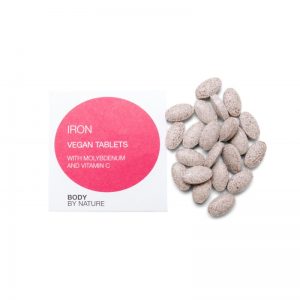
This is where supplementation steps in. A well-formulated iron supplement — ideally iron bisglycinate, which absorbs significantly better than iron sulphate and causes far less digestive discomfort — fills the gap reliably.
Always take iron supplements alongside Vitamin C and away from tea, coffee, and calcium supplements to maximise absorption. Never supplement iron without knowing your levels first — excess iron causes its own health problems. Ask your GP for a ferritin test before starting.
The Bottom Line
A vegan diet can meet iron needs. But it requires deliberate food choices, smart combinations, and an honest assessment of individual demand.
For many vegans, particularly women and athletes, supplementation is not a sign of dietary failure. It’s a practical response to a real physiological gap — one that makes the difference between functioning adequately and feeling genuinely well.
Body by Nature Supplements provides a highly bioavailable iron supplement designed for people who want effective support without the digestive side effects that deter consistent use.