


If you’ve been trying to lose weight, you’ve probably seen vitamin B12 mentioned in the same breath as energy, metabolism, and fat-burning. Some people swear that B12 shots or supplements helped them drop pounds, while others say it made no difference at all.
So what’s the truth about vitamin B12 and weight loss? Is there a real link, or is it just another wellness myth?
In this article, we’ll break down what vitamin B12 actually does in the body, what the research suggests about weight loss, and when supplementing may (or may not) make sense.
What is vitamin B12 and what does it do?
Vitamin B12 (also called cobalamin) is an essential nutrient. Your body needs it for:
- Normal energy metabolism (how your body converts food into usable energy)
- Red blood cell formation
- Normal nervous system function
- DNA synthesis
Because B12 is involved in energy production, low levels can leave you feeling tired, weak, and foggy — which can indirectly affect your motivation to exercise, meal prep, and stay consistent.
That’s where the conversation around vitamin B12 and weight loss often starts.
Does vitamin B12 directly cause weight loss?
For most people, vitamin B12 does not directly cause weight loss.
If your B12 levels are normal, taking extra B12 isn’t likely to “speed up” your metabolism in a way that leads to meaningful fat loss. Your body uses what it needs and excretes the rest.
However, there’s an important nuance:
If you’re deficient, correcting it can support weight loss efforts
If you’re low in B12, you may experience fatigue, low mood, and reduced exercise tolerance. In that case, improving your B12 status can help you feel more energised and capable — which can make it easier to stick to healthy habits.
So the real link between vitamin B12 and weight loss is often indirect: B12 supports energy and wellbeing, which supports consistency.
Why do people associate B12 with metabolism?
B12 plays a role in the metabolism of fats and proteins. That doesn’t mean it “burns fat” on its own — but it’s part of the system that helps your body process nutrients efficiently.
If you’re deficient, that system doesn’t run as smoothly, and you may feel sluggish.
Who is more likely to be low in vitamin B12?
B12 is found mainly in animal-based foods, so certain groups are at higher risk of low intake or absorption issues.
You may be more likely to have low B12 if you:
- Follow a vegan or vegetarian diet (especially without fortified foods)
- Are over 50 (absorption can decline with age)
- Have digestive conditions that affect absorption
- Take certain medications long-term (your clinician can advise)
- Have a diet low in animal products overall
If you suspect low B12, it’s worth speaking to a healthcare professional and considering a blood test.
What about B12 shots for weight loss?
B12 injections are sometimes marketed as a quick fix for energy and weight loss. In medical settings, injections are used for people who are deficient or who can’t absorb B12 properly.
If you’re deficient, injections can be very effective at restoring levels.
But if you’re not deficient, the evidence that injections lead to weight loss is weak. You might feel a temporary boost in energy (especially if you were borderline low), but that’s not the same as fat loss.
Can B12 help with appetite or cravings?
There’s no strong evidence that B12 directly suppresses appetite.
That said, if low B12 contributes to fatigue and poor sleep, you may be more likely to crave quick energy foods (sugary snacks, refined carbs). In that scenario, improving your nutrient status can support better routines — again, an indirect pathway.
How to use vitamin B12 sensibly (if weight loss is your goal)
If you’re exploring vitamin B12 and weight loss, the best approach is to use B12 as a supportive tool, not a standalone solution.
1) Focus on the foundations first
Weight loss is still driven primarily by:
- Consistent nutrition habits
- A manageable calorie deficit (for fat loss)
- Strength training and daily movement
- Sleep and stress management
B12 can support your energy — but it won’t replace these.
2) Choose the right format
Common B12 supplement forms include:
- Cyanocobalamin: stable and widely used
- Methylcobalamin: an “active” form some people prefer
Either can be effective. What matters most is consistency and appropriate dosing.
3) Consider a B-complex if you want broader support
B12 works alongside other B vitamins involved in energy metabolism. If your diet is inconsistent, a high-quality B-complex may be useful.
4) Don’t megadose “just because”
B12 is generally considered safe for most people, but more isn’t always better. Follow label directions and professional advice.
Where Body by Nature Supplements fits in
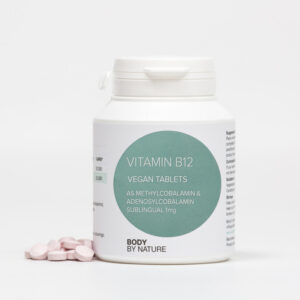
If you’re looking for a simple, reliable option to support energy and wellbeing while you work on your nutrition and lifestyle, Body by Nature Supplements’ Vitamin B12 (or a B-complex, depending on your needs) can be a practical addition.
It’s especially relevant if you:
- Don’t eat many animal products
- Feel low in energy during dieting
- Want nutritional support while building consistent habits
Final thoughts
The link between vitamin B12 and weight loss is real — but it’s not the “fat-burning” shortcut many people hope for.
If you’re deficient, improving your B12 status can help you feel more energised, support training, and stay consistent with healthy routines. If your levels are already normal, extra B12 is unlikely to cause weight loss on its own.