


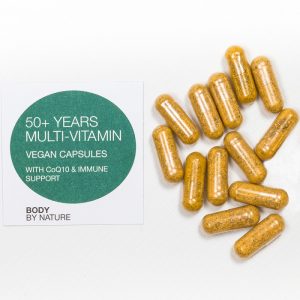
Four scientists explain what supplements and multivitamins they take every day and why.
Food supplements are a multi-million dollar industry. But unlike pharmaceutical companies, producers are not able to prove that their supplements have an effect. They just need to be safe – and that even applies to new supplements. Experts in topics ranging from public health to sports psychology; explain what supplements and multivitamins they take every day and why.
Yellow root (turmeric) for preventing rheumatoid arthritis
Dr. Simon Bishop, Public Health Teacher and Primary Health Care, Bangor University:
Yellow root is known as an ingredient in South Asian cuisine. It adds a warm, earthy taste to curry dishes. In recent years, however, it has also been interesting because of its medical properties. I have been taking ground yellowish root for about two years now as a nutritional supplement, but I have been interested for much longer in its application in medicine.
Yellow root is used in many Asian countries as an inflammatory inhibitor or to speed up wound healing. But now there are more and more indications that turmeric, a yellow-root substance, also helps to protect you from a range of diseases such as; rheumatoid arthritis, heart disease, dementia, and certain types of cancer.
Vitamin D for healthy bones
Graeme Close, professor of human psychology, Liverpool John Moores University:
Vitamin D is a special type of multivitamins, because our body makes it by itself using sunlight. That’s why people in cold countries or people who spend a lot of time indoors are more at risk of a shortage. People with darker skin tones are at the same risk, as melanin slows down the production of vitamin D in the skin. It is estimated that approximately one billion people are suffering from a deficit.
Most people know they need to take enough vitamin D for healthy bones. But in recent years scientists have also become aware of other important functions of vitamin D… We are now convinced that a deficiency can weaken our immune system and make muscles function less well and recover less well. In some cases it can even cause depression.
Multivitamins is one of the cheapest supplements and it is easy to correct a deficiency. People living in the UK might have some shortages of Vitamin D during October to April. This is the period where sunlight is scarce. That is why I take a dose of 50mg per day and I recommend you get all multivitamins online from bodybynaturesupplements.
Omega 3 improves brain function
Haleh Moravej, head lecturer in Nutrition Sciences, Manchester Metropolitan University:
I started taking omega 3 after attending a winter conference of Nutrition Society in 2016. Scientific evidence about the benefits of omega 3 is overwhelming. It could improve brain function; prevent mood disorders and even Alzheimer’s disease. From an analysis of my diet it became clear that I did not get enough omega 3 fatty acids. A healthy adult should pick up 250-500 mg daily.
Omega 3 is a fatty acid. These fatty acids are mainly in fish. Ala (alpha-linoleic acid), another type of omega 3, is mainly in vegetable foods such as nuts and seeds. Walnuts and flax seed are a good example of this. As a teacher, my diet is less varied and enriched with omega 3 fatty acid that sustains me.
Prebiotics
Neil Williams, teacher of motion physiology and nutrition, Nottingham Trent University:
Prebiotics are undigestible carbohydrates that promote the growth and activity of benign bacteria in the intestines. That is why they have a positive effect on the metabolic syndrome. In addition, they can promote the functioning of the immune system and the absorption of minerals, reduce travel diarrhea and improve the health of the intestines.
I first encountered prebiotics in my research on the intestinal flora of athletes suffering from stress asthma. Earlier studies had shown that the composition of the intestinal flora in asthma patients is different. The participants in our study also indicated that eczema and allergic symptoms became less serious.
People don’t actually believe there is a need or importance in taking supplements since they get all their micronutrients from natural food. The fact is that you cannot know the actual amount of micronutrients that’s lacking in your system. What to note from this write-up is the importance of supplements and multivitamins. That is why you must not neglect the importance, and dangers of its deficiency.