

Hailed as the “golden wonder herb of the Orient,” curcumin has been used as a medicine for over 4,000 years.
Curcumin is the active ingredient in turmeric, which is native to Southeast Asia but is now popular and considered a number one health ingredient all over the world.
What Is Curcumin?
Curcumin is a nutritional compound produced by the turmeric plant. It is a bright yellow substance with powerful, and natural, anti-inflammatory properties. Turmeric and curcumin are not the same thing, and when choosing supplements, it’s important to know this.
That is because just taking turmeric delivers almost no health benefits. Similarly, taking only curcumin leads to poor results as your body cannot absorb it well. So it is important to have a turmeric extract that provides a good bioeffective dose of curcumin.
Curcumin was first isolated by scientists around the turn of the 20th century, and its antibacterial properties were first demonstrated in 1949. Subsequent research showed it to be anti-inflammatory, antioxidant, supportive to cognitive health, liver health, and several other marked benefits including antidepressant action.
Health Benefits
Claims about the health benefits of curcumin abound. Traditionally, it was used to treat skin disorders, upper respiratory disorders, joint pain, digestive problems, and more. Modern research has confirmed some of these long-understood health benefits and helped demonstrate the biological mechanisms behind them. There are:
- Reduction of inflammation and pro-inflammatory cytokines
- Improved antioxidant activity
- Nervous system protection and support including nerve signalling
- Improved digestive health and reduction in gastrointestinal inflammation and “leaky gut”.
- Enhanced mitochondrial activity
- Improved immunity
- Reduction in stress
- Supports the balance of insulin and leptin (the satiety hormone)
- Anti-Inflammatory
Chronic inflammation is a well-known central driver and exacerbator of many diseases, with symptoms of inflammation ranging from joint pain to cognitive decline and mood disorders such as depression.
Curcumin’s anti-inflammatory mechanisms are diverse and wide-reaching.
Briefly, it:
- Inhibits pathways that are critical for activating an inflammatory response.
- It blocks the transcription of pro-inflammatory genes.
- It reduces cell proliferation, inflammation, and induces the destruction of abnormal cells, which are themselves pro-inflammatory.
- It regulates an inflammatory signalling pathway, preventing the production of inflammatory mediators
- it blocks the assembly of inflammosome complexes, which drive and potentiate inflammation systemically.
- It aids the production of cellular defences against inflammation.
Research on curcumin for its anti-inflammatory properties has been on the rise rapidly in the last decade. In 2008, there were at least twelve active clinical trials of curcumin in the United States, Israel, and Hong Kong. As of July 2012, there had been observations from 67 clinical trials that had been published, with another 35 clinical trials which were in progress at that time.
- Anti-Oxidant
Curcumin is a potent antioxidant that acts as a free radical scavenger to help reduce oxidative stress in the body.
Oxidative stress is defined as an imbalance between reactive oxygen species production and antioxidant defence. This imbalance can lead to cellular damage, contribute to the development of chronic disease, and acceleration of the aging process. Therefore, supporting the body’s antioxidant capacity through diet, lifestyle, and targeted supplementation is essential for maintaining overall health and preventing disease.
Curcumin has been found in research to enhance plasma antioxidant enzymes and increase the activity of specific proteins, which play a role in antioxidant defence. Research has specifically found that curcumin supplementation can increase total antioxidant capacity in conditions like rheumatoid arthritis (R.A.) where there is impaired antioxidant defence and inflammation, with therapeutically beneficial outcomes.
Curcumin may also support longevity and ageing, due to its multiple positive effects on metabolic health, such as improving insulin sensitivity and supporting mitochondrial biogenesis. It may both indirectly and directly regulate the mTOR (mammalian target of rapamycin) pathway, a key central cellular control system for growth, metabolism, and survival. Therefore, by targeting key pathways involved with ageing, inflammation, oxidative stress, and mitochondrial function, curcumin shows promise for its use in both disease prevention and even longevity.
- Neuroprotection
Curcumin supports and protects the nervous system by leveraging its potent anti-inflammatory and antioxidant properties. It can cross the blood-brain barrier, reduce neuroinflammation by downregulating inflammatory pathways, and increase the brain’s antioxidant capacity by boosting enzymes like superoxide dismutase. Research suggests it may also improve mood and memory and protect against neurodegenerative conditions like Parkinson’s and Alzheimer’s disease,though more human studies are needed.
- Improved digestive health
Curcumin can help support and improve gut health by modulating the friendly bacteria populations and promoting the growth of beneficial bacteria, improving microbial diversity and richness in the gut. It also helps to strengthen the intestinal lining, reducing permeability and preventing the leakage of harmful substances into the bloodstream.
- Improved metabolic health
Curcumin shows promise for improving metabolic health by reducing blood glucose and lipid levels, improving insulin sensitivity, and combatting inflammation and oxidative stress.
It exerts its effects by targeting cellular pathways involved in metabolism, which can help manage conditions like metabolic syndrome, obesity, non-alcoholic fatty liver disease (NAFLD), and type 2 diabetes.
- Stress reduction and mood elevation
Stress causes destructive changes to our brain.
While we may feel anxious due to stress, those feelings are minor compared to the damage done to our brain cells. Stress-induced brain changes often lead to anxiety or depression.
Curcumin can reverse harmful brain changes induced by chronic stress. It also stimulates the formation of new brain cells and their connections—two processes that can prevent or mitigate symptoms of depression.
Oxidative stress is a significant risk factor in the development of depression and is even thought to alter serotonin levels. Curcumin has been found to increase antioxidant activity through its effects on glutathione and Superoxide Dismutase (SOD), contributing to reduced symptoms of depression.
Curcumin Bioavailability – the issue -and what to look for in products to ensure efficacy
Turmeric itself contains only about 2-5% of curcumin by weight, meaning that the amount consumed in typical culinary use is quite small. To reach therapeutic levels shown to be effective in clinical trials, higher doses are usually required, typically achieved through concentrated curcumin supplements.
Curcumin in its free form is thought to have poor solubility and absorption in the gastrointestinal tract, accompanied by rapid biotransformation to inactive metabolites; however, micro- and nano-formulations of curcumin can greatly enhance its absorption.
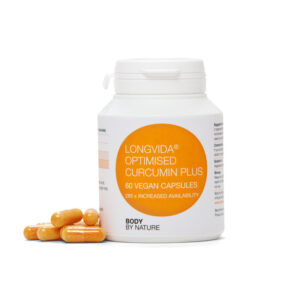
Curcumin is a fat-soluble compound, and increasing its bioavailability with fat-soluble liposomes and phospholipid complexes is the best delivery method as it supports optimal absorption in the small intestine and reduces degradation in the digestive tract. Longvida curcumin uses this technique and is one of the most bioeffective forms of curcumin on the market.
Why is ginger sometimes added to curcumin products?
Ginger is added to curcumin products to act as a bioenhancer, which increases the absorption and effectiveness of curcumin in the body. Both ginger and curcumin have strong anti-inflammatory and antioxidant properties, and combining them creates a synergistic effect where they work better together to reduce inflammation, oxidative stress, and pain.
Body by Nature Nutrition team September 2025
Please email in any comments or questions to info@bodybynaturesupplements.co.uk
References available on request.