


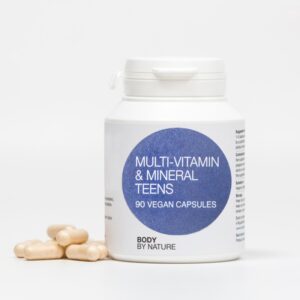
Teen years are a full-on growth phase: bodies change quickly, appetites fluctuate, sleep can be inconsistent, and busy schedules can make regular meals tricky. It’s no surprise many parents (and teens) start wondering whether a multi-vitamin is a smart idea.
The short answer: sometimes, yes. Not every teen needs one, but in the right situation a multi-vitamin can help fill common gaps and support a healthy routine.
In this guide, we’ll cover when supplementing makes sense, which nutrients matter most for teens, what to avoid, and how to choose a teen-friendly multi-vitamin.
Do teens need a multi-vitamin?
Many teens can meet their needs through food—especially with a varied diet that includes protein, fruit and veg, whole grains, and healthy fats.
But real life is messy. A multi-vitamin may be worth considering if a teen:
- Skips meals (especially breakfast)
- Eats a limited or repetitive diet (picky eating, “beige food” phase)
- Avoids key food groups (e.g., no fish, no dairy, minimal vegetables)
- Follows a vegetarian or vegan diet (B12 becomes critical)
- Is in a heavy training schedule (sport, dance, gym)
- Has a very busy routine and inconsistent food intake
If there are concerns about growth, fatigue, mood, appetite, or menstrual health, it’s best to speak with a healthcare professional. A multi-vitamin can support the basics, but it shouldn’t mask an underlying issue.
What a multi-vitamin can (and can’t) do for teens
A good multi-vitamin can:
- Help cover common nutrient gaps
- Support normal energy metabolism (B vitamins)
- Support immune function (vitamin C, D, zinc)
- Support bones and muscles (vitamin D and other supportive nutrients)
A multi-vitamin can’t replace:
- Adequate calories and protein
- Hydration
- Sleep
- A consistent meal pattern
Think of it as a back-up plan—not the main plan.
Key nutrients to look for in a teen multi-vitamin
1) Vitamin D (bones, muscles, immune support)
Vitamin D is a big one for teens, especially in winter months or for those who spend most of the day indoors.
Look for:
- Vitamin D included
- A sensible, daily dose appropriate for teens
Vitamin D supports normal calcium absorption, which matters during peak bone-building years.
2) B vitamins (energy metabolism and nervous system support)
Teens often reach for supplements because they feel tired. While a multi-vitamin won’t “create” energy, B vitamins support normal energy metabolism.
Look for:
- B6
- B12
- Folate
If your teen is vegan/vegetarian, B12 is non-negotiable.
3) Iron (only when it makes sense)
Iron is one of the most misunderstood nutrients in teen supplements.
Iron may be more relevant for:
- Teens who menstruate (due to monthly losses)
- Teens who eat little or no red meat
- Endurance athletes
But iron isn’t “for everyone,” and unnecessary iron can cause digestive discomfort.
Practical approach:
- Don’t automatically choose an iron-containing multi-vitamin unless there’s a reason.
- If fatigue is a concern, consider checking iron status with a practitioner rather than guessing.
4) Zinc (immune support and skin)
Zinc supports normal immune function and is involved in many processes related to growth and skin health.
Look for:
- Zinc included at a moderate daily amount
- Avoid stacking multiple zinc products (e.g., acne supplements + multi-vitamin) without checking totals
5) Iodine (thyroid support)
Iodine supports normal thyroid function, which plays a role in metabolism and growth.
If a teen avoids dairy and fish and doesn’t use iodised salt, iodine may be a nutrient to watch.
6) Calcium and magnesium (often not fully covered)
Many parents assume a multi-vitamin covers calcium and magnesium. In reality, these minerals are bulky, so multivitamins often contain only small amounts.
If bone support is a priority:
- Prioritise dietary calcium (dairy or fortified alternatives)
- Consider magnesium separately if needed (with professional guidance)
7) Omega-3 (usually separate)
Omega-3s support brain and eye health, but they’re rarely included in a standard multi-vitamin.
If your teen doesn’t eat oily fish, omega-3 may be worth considering as a separate supplement.
What to avoid in a teen multi-vitamin
1) Mega-dose “energy” formulas
Some products push extremely high doses of B vitamins or include stimulants. For teens, this can be unnecessary (and sometimes uncomfortable).
Choose a multi-vitamin that supports a steady baseline, not a “buzz.”
2) Proprietary blends that hide amounts
Avoid products that don’t clearly list the dose of each nutrient. Transparency matters.
3) Too much sugar (common in gummies)
Gummies can be convenient, but some contain a lot of added sugar.
If choosing gummies:
- Check sugar per serving
- Consider taking with meals and maintaining good brushing habits
4) Adult formulas by default
Teens aren’t small adults. If a product is designed for adults only, check suitability and dosing carefully.
A practical checklist: choosing the right multi-vitamin for teens
Use this quick checklist when comparing a multi-vitamin:
- Age-appropriate: designed for teens or suitable for teen dosing
- Vitamin D included: yes, with a sensible dose
- B12 included: especially important for plant-based diets
- Zinc included: moderate daily amount
- Iron: only if appropriate for the teen’s needs
- Clear label: no proprietary blends
- Format they’ll take: capsule, chewable, or gummy they’ll actually use daily
When should teens take a multi-vitamin?
Most teens do best taking a multi-vitamin:
- With breakfast or lunch
- With food (to reduce nausea)
- At the same time daily to build consistency
If your teen takes thyroid medication, antibiotics, or other prescriptions, ask a pharmacist about spacing supplements—minerals can sometimes interfere with absorption.
Where Body by Nature Supplements fits in
At Body by Nature Supplements, the focus is on quality-first products that support real routines. If you’re considering multi-vitamins for a teen, look for clear labelling, sensible dosing, and a formula that supports everyday wellbeing without unnecessary extras.
Explore the range here: https://www.bodybynaturesupplements.com
Final thoughts
A teen multi-vitamin can make sense when diet is inconsistent, food groups are limited, or lifestyle demands are high. The best choice is simple, transparent, and age-appropriate—supporting vitamin D, B vitamins, and key minerals without mega-doses or hidden blends.
If you’re unsure whether your teen needs iron or other targeted nutrients, it’s worth checking with a healthcare professional. The goal is confident, sensible support—one daily habit at a time.