


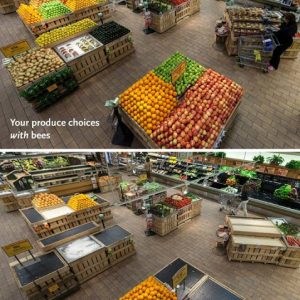
One of every three bites of food comes from plants pollinated by honeybees and other pollinators.
Yet, major declines in bee populations threaten the availability of many fresh ingredients consumers
rely on for their dinner tables.
To raise awareness of just how crucial pollinators are to our food system, the University Heights Whole
Foods Market store temporarily removed all produce that comes from plants dependent on pollinators.
They pulled from shelves 237 of 453 products – 52 percent of the department’s normal product mix.
Products removed included:
- Apples
- Onions
- Avocados
- Carrots
- Mangos
- Lemons
- Limes
- Honeydew
- Cantaloupe
- Zucchini
- Summer squash
- Eggplant
- Cucumbers
- Celery
- Green onions
- Cauliflower
- Leeks
- Bok choy
- Kale
- Broccoli
- Broccoli rabe
- Mustard greens
To help support honeybee populations, for every pound of organic summer squash sold at
Whole Foods Market stores from June 12-25 the company will donate 10 cents to The Xerces Society
for pollinator preservation.

“Pollinators are a critical link in our food system.
More than 85% of earth’s plant species – many of which compose some of the most nutritional parts of our diet – require pollinators to exist. Yet we continue to see alarming declines in bee numbers,” said Eric Mader, assistant pollinator conservation director at The Xerces Society.
“Our organization works with farmers nationwide to help
them create wildflower habitat and adopt less pesticide-intensive practices. These simple strategies can tip the balance back in favor of bees.”
Whole Foods Market offers four more ways to “bee part
of the solution.” Details are online at www.wholefoodsmarket.com/sharethebuzz.
- Bee organic: Buying organic is an easy way to support pollinators.
- Bee savvy at home: Most pest problems can be solved without toxic and persistent pesticides.
- Bee a gardener: Plant bee-friendly flowers and fruits.