


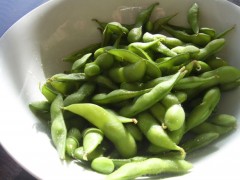
If you don’t feel like reading the rest of this post, the answer can be summarized in one sentence:Soy is not healthy, it can cause health problems and it’s widespread use is destructive to the planet… don’t eat it!
Want to know why? Read on…
Soy is a legume, and as such, has the same harmful components that other beans do. But there is more. Some other harmful properties of soybeans are:
- Soybeans contain phytoestrogens, which mimic the body’s natural estrogen hormones. For men, this can lead to a testosterone imbalance, infertility, low sperm count, and increased risk of cancers. For women, it can cause estrogen dominance, which has been linked to infertility, menstrual troubles and cancer…
- These phytoestrogens are so strong that a baby consuming only soy formula is consuming the equivalent hormones of 4 birth control pills a day!
- The high levels of phytic acid in soy inhibit the body’s ability to absorb important minerals, including zinc, calcium, copper, iron and magnesium (which many people are dangerously deficient in already).
- Soy also contains protease inhibitors, which can block the enzymes that are necessary for the digestion of certain proteins.
- The goitrogens in soy are potent anti-thyroid compounds that can lead to endocrine disruption and thyroid disorders. Infants on soy formula have a much higher risk of autoimmune thyroid disease. (note: cruciferous vegetables like broccoli, cauliflower and cabbage have these properties as well, though they are lessened greatly by cooking. Cooking does not remove these compounds from soy based foods!)
- Soy is often promoted as an alternative food for celiac and gluten intolerant people, but its lectins can be harmful to the intestines and prevent healing even when gluten is removed.
- Many studies have found even more harmful properties of soy: This link has a summary of many studies done about the harmful effects of soy.
- Consumption of soy foods increases the body’s need for Vitamin D, Vitamin B-12, calcium and magnesium.
In addition to being harmful to our bodies, soy production is harmful to the planet and to livestock who eat it as well. Almost all soybeans grown today are genetically modified and “Round-up ready.” They contain a gene that allows them to be directly sprayed with pesticides without dying. There is some evidence that this gene can mutate and create a pesticide-like toxin in the body.
This mutation means that soybeans can be (and are) sprayed with large amounts of pesticides and herbicides during their cultivation. In addition, soybeans strip the soil of many nutrients, leaving soil depleted. (On a personal note, I live in an area where soybeans are grown, and have witnessed first hand how much the soybeans are sprayed during their growth and how harmful these chemicals are to other plants and vegetation)
Animals who are fed soy can suffer many of the same health consequences as people who consume too much soy, and these harmful properties are then passed on in their meat.
What about Asian Countries Where Soy is Consumed In Large Amounts?
I often get this question when I talk about the negative properties in soy. It is assumed that people in Asian countries consume a lot of soy, and since they are thin, soy must be healthy.
It is important to note that people in these countries do not consume as much soy as we assume they do. In fact, in most places, soy based foods are served as a condiment, not a main course and not as a replacement for animal protein. In addition, these foods are fermented or traditionally prepared, which minimizes the harmful factors.
In many countries, soy based foods are consumed with seaweed containing foods or traditionally made broths, which both have high nutrient concentration and can help mitigate the harmful effects of the soy.
An Inferior Protein Source
Besides the lectin and phytic acid in soybeans, they aren’t the complete protein source they are touted to be. Like all beans, they lack the amino acids Methionine and Cystine. While they are often promoted for being able to provide Vitamin B-12 to those eating a vegetarian diet, the Vitamin B-12 in soybeans can not be used by the body and actually cause the body to need more B-12.
As I often say about grains a beans: there are no nutrients in these foods that can’t be found in higher amounts in meats, vegetables and healthy fats, so stick to those and avoid the lectins and phytic acid!
A Note on Fermented Soy
If you are going to consume soy, it is least harmful in its fermented state. Foods like Tempeh and Miso have some health promoting properties and many of the harmful anti-nutrients are fermented out. These are fine in moderation. Just look for ones that have been traditionally fermented.
Soy is Everywhere!