


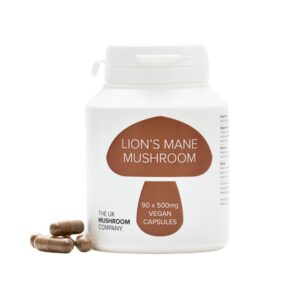
If you’ve been seeing Lion’s Mane everywhere lately, you’re not imagining it. This shaggy-looking mushroom (named because it resembles a white mane) has become one of the most talked-about ingredients in the wellness world—especially for focus, memory, and overall brain support.
But beyond the hype, what does Lion’s Mane actually do? And what does the science say?
In this Body by Nature Supplements guide, we’ll break down the lions mane mushroom benefits, how it works in the body, what research is exploring, and how to use it sensibly as part of a realistic routine.
What is Lion’s Mane mushroom?
Lion’s Mane (Hericium erinaceus) is an edible mushroom used traditionally in parts of Asia. In supplement form, it’s typically made from the fruiting body, the mycelium, or a combination of both.
What makes it interesting for brain health is its unique natural compounds—particularly hericenones and erinacines—which researchers are studying for their potential role in supporting nerve health.
Lions mane mushroom benefits: why people take it
People usually take Lion’s Mane for one of three reasons:
- Focus and mental clarity (especially during busy work periods)
- Memory and learning support
- Long-term brain health and healthy ageing
It’s important to keep expectations grounded: Lion’s Mane isn’t a quick “instant focus” stimulant like caffeine. Many people think of it more like a supportive, steady supplement—something you take consistently to support the bigger picture.
The “brain” connection: what the science is looking at
When we talk about the science behind the lions mane mushroom benefits, most of the interest centres around the nervous system.
1) Nerve Growth Factor (NGF) support (a key research area)
One of the most discussed mechanisms is Lion’s Mane’s potential relationship with Nerve Growth Factor (NGF). NGF is a protein involved in the growth, maintenance, and survival of certain neurons.
Some lab and animal studies suggest Lion’s Mane compounds may support NGF activity. That has made it a major focus for researchers exploring cognitive health and nerve function.
Important note: lab and animal findings don’t automatically translate into the same effect in humans. But they do help explain why Lion’s Mane is being studied so closely.
2) Cognitive function and mild memory concerns
There have been small human studies looking at Lion’s Mane and cognitive function, particularly in older adults with mild cognitive concerns. Some findings suggest potential improvements while supplementing, with effects possibly reducing after stopping.
This doesn’t mean Lion’s Mane is a “cure” for anything—but it does suggest that consistent use may matter, and that the brain-support conversation isn’t purely marketing.
3) Mood, stress, and the mind-body link
Your brain doesn’t operate in isolation. Stress, sleep, and mood all influence focus and memory.
Some early research has explored Lion’s Mane in relation to mood and stress (including small trials in specific groups). While the evidence is still developing, this is another reason the lions mane mushroom benefits conversation often includes mental wellbeing—not just productivity.
Who might consider Lion’s Mane?
Lion’s Mane may be worth considering if you:
- Have a mentally demanding job and want non-stimulant support
- Feel “foggy” during busy seasons and want a steadier routine
- Are focused on long-term brain health as you age
- Want to support focus alongside better sleep, hydration, and nutrition
It can also appeal to people who don’t tolerate caffeine well but still want something that supports mental performance.
How to take Lion’s Mane (and what to expect)
Because Lion’s Mane isn’t a stimulant, it’s usually best approached like this:
- Take it consistently (daily is common)
- Give it time (think weeks, not hours)
- Track your baseline (focus, memory, mood, and energy)
Many people take it in the morning or early afternoon. If your supplement is in capsule form, it’s easy to stack into an existing routine.
With or without food?
Lion’s Mane is often taken with food for comfort, but many people tolerate it either way. If you have a sensitive stomach, start with food.
What to look for in a Lion’s Mane supplement
Not all Lion’s Mane products are created equal. If you’re shopping for quality, look for:
- Clear labelling (fruiting body vs mycelium)
- A stated amount per serving
- Transparent ingredient list (no unnecessary fillers)
- Quality standards from a reputable brand
If your goal is brain support, you want a product you’ll actually take consistently—because consistency is where the lions mane mushroom benefits are most likely to show up.
Can you combine Lion’s Mane with other supplements?
Often, yes—depending on your routine and any health conditions.
Lion’s Mane is commonly paired with:
- Omega 3 (brain and heart support)
- Magnesium (sleep and relaxation support)
- Vitamin D (especially in the UK)
Some people also stack it with caffeine (coffee or tea) for a “calm focus” feel, but if you’re sensitive to stimulants, you may prefer Lion’s Mane on its own.
Safety notes and who should be cautious
Lion’s Mane is generally considered well tolerated for many people, but you should be cautious if:
- You have a mushroom allergy
- You’re pregnant or breastfeeding
- You’re on medication or managing a health condition (check with a healthcare professional)
The bottom line
Lion’s Mane is popular for a reason: it’s one of the few natural ingredients being actively studied for its relationship with nerve health, cognitive function, and overall brain support. While research is still evolving, the early evidence helps explain why so many people are interested in the lions mane mushroom benefits—especially for focus, memory, and healthy ageing.
If you want to try Lion’s Mane, keep it simple: choose a quality product, take it consistently, and support it with the fundamentals that make the biggest difference—sleep, movement, hydration, and a nutrient-dense diet.