

If you’ve ever looked in the mirror and thought your hair feels thinner than it used to, your skin looks dull, or your nails keep splitting, you’re not alone. Hair, skin and nails are often the first places we notice when stress is high, sleep is off, or nutrition isn’t quite where it needs to be.
That’s why “hair, skin and nails vitamins” have become one of the most popular supplement categories. The right formula can help fill nutritional gaps and support the body’s natural processes involved in growth, repair and protection from oxidative stress.
In this blog, we’ll cover what hair, skin and nails vitamins actually do, the most useful ingredients to look for (and why), how to take them for best results, and what makes a high-quality vegan option.
What are hair, skin and nails vitamins?
Hair, skin and nails vitamins are dietary supplements designed to support the normal structure, growth and maintenance of:
- Hair (strength, shine, growth cycle support)
- Skin (collagen formation, antioxidant protection, overall appearance)
- Nails (strength, reduced brittleness, healthy growth)
These supplements typically combine vitamins, minerals and plant extracts that contribute to normal tissue formation and protect cells from oxidative stress.
Important note: supplements don’t work like a quick cosmetic fix. They’re best thought of as internal support—helping your body do what it already knows how to do, but with better nutritional resources.
Why hair, skin and nails need nutritional support
Hair, skin and nails are made from proteins and connective tissues that rely on a steady supply of nutrients. When the body is under pressure—dieting, stress, illness, hormonal shifts, lack of sleep—your body prioritises vital organs first. Hair and nails, in particular, can become “non-essential” in the body’s resource allocation.
That can show up as:
- Hair that looks less full or grows more slowly
- Dryness or loss of shine
- Skin that feels less elastic or looks tired
- Nails that peel, split, or break easily
A well-designed supplement can help by supporting:
- Collagen formation
- Keratin structure (key for hair and nails)
- Cell division and repair
- Antioxidant protection
The key nutrients in hair, skin and nails vitamins (and what they do)
Let’s break down the ingredients you’ll commonly see in stronger formulas, including those found in Body By Nature Supplements’ Hair, Skin & Nails vegan product.
Vitamin C (often from acerola cherry)
Vitamin C is one of the most important nutrients for skin support because it contributes to collagen formation—a structural protein that helps maintain skin’s firmness and resilience.
Contributes to:
- Protection of cells from oxidative stress
- Normal function of skin and blood vessels
When you see vitamin C sourced from acerola cherry, that’s often positioned as a more natural, food-based source.
Biotin (Vitamin B7)
Arguably the most famous “hair vitamin,” and it’s included in many formulas for good reason. Biotin contributes to the maintenance of normal hair and skin.
Biotin is water-soluble and is often used as a foundational ingredient in hair/skin/nail blends.
Zinc (often zinc citrate)
Zinc has multiple roles in the body, including a role in the process of cell division. It also contributes to:
- Maintenance of normal hair, nails and skin
- Protection of cells from oxidative stress
Zinc is a common inclusion because hair follicles and skin cells are highly active tissues that depend on consistent nutrient supply.
Selenium (often as seleno L-methionine)
Selenium is both a mineral and an antioxidant. It contributes to:
- Maintenance of normal hair
- Maintenance of normal nails
- Protection of cells from oxidative stress
Seleno L-methionine is a form often used in supplements.
Copper (often copper citrate)
Copper is essential for the formation of melanin, the pigment involved in hair, skin and eye colour. Contributing to:
- Maintenance of normal connective tissues
- Normal hair pigmentation
- Normal skin pigmentation
- Protection of cells from oxidative stress
In other words: copper isn’t just a “beauty mineral”—it’s a structural and protective nutrient.
Pantothenic acid (Vitamin B5)
Vitamin B5 is involved in energy metabolism and is important for the maintenance and repair of cells and tissue. It’s commonly included in skin-focused formulas.
Some people also associate B5 with supporting clearer-looking skin, which is why it often appears in acne-related discussions.
MSM (Methylsulfonylmethane)
MSM is an organic form of sulphur. Sulphur is a component of keratin, the main protein in hair and nails.
MSM is often included because it supports the broader goal of:
- Stronger-feeling hair and nails
- Supporting connective tissue structure alongside other nutrients
Silica (often from horsetail extract)
Silica is concentrated in connective tissues and is commonly used in supplements aimed at hair, skin and nails. It’s often linked with collagen support and tissue structure.
In the Body By Nature formula, silica is listed as coming from horsetail extract.
Pine bark extract (maritime pine bark)
Pine bark extract is rich in flavonoids such as procyanidins/proanthocyanidins and is included for antioxidant support.
Antioxidants matter because oxidative stress can affect skin appearance and overall tissue health.
Bilberry extract
Bilberry contains anthocyanidins and is often used for antioxidant support. While it’s sometimes associated with eye health, it can also be included in beauty blends as part of a broader antioxidant strategy.
Tomato extract (providing lycopene)
Lycopene is a well-known antioxidant found in tomatoes. It’s often included for cellular protection and is commonly seen in wellness formulas.
Beta-carotene (from Dunaliella salina)
Beta-carotene is a carotenoid and a precursor to vitamin A. It’s often included in skin-support formulas because vitamin A is involved in skin cell turnover and maintenance.
Lutein (from marigold extract) and astaxanthin
These are antioxidant compounds that are often used to support cellular protection. They’re commonly seen in formulas designed to support skin appearance and resilience.
Beta glucan (from Saccharomyces cerevisiae)
Beta glucans are often used in wellness formulas and are commonly associated with immune support. While not a classic “beauty vitamin,” immune balance and skin health can be linked.
Cocoa extract (providing flavanols)
Cocoa flavanols are included for antioxidant support and are sometimes used in skin-focused nutrition due to their relationship with circulation and oxidative stress.
What makes a great hair, skin and nails supplement?
There are plenty of products on the market, but the best ones tend to share a few traits.
1) It’s not just biotin
Biotin can be helpful, but it’s rarely the whole story. Strong formulas combine:
- Collagen-support nutrients (like vitamin C)
- Mineral support (zinc, selenium, copper)
- Structural support (MSM, silica)
- Antioxidants (lycopene, pine bark, astaxanthin, etc.)
2) It supports the “inside-out” process
Hair and nails don’t change overnight. A supplement should be designed for consistent daily use.
3) It fits your dietary preferences
If you’re vegan or vegetarian, check:
- Capsule shell type (often vegetable cellulose / HPMC)
- Any animal-derived ingredients
4) It avoids unnecessary additives
Many people prefer supplements that are free from common allergens and avoid added colourings, flavourings and preservatives.
How long do hair, skin and nails vitamins take to work?
This is one of the most important expectations to set.
- Skin may show changes sooner because it renews relatively quickly.
- Hair changes can take longer because hair grows in cycles.
- Nails often take weeks to months to fully grow out.
A realistic approach is to commit to a consistent routine for 8–12 weeks and evaluate progress.
How to take hair, skin and nails vitamins for best results
Designed for daily use. For example, the Body By Nature Hair, Skin & Nails product suggests:
- Take 1 capsule daily with food (or as directed by a practitioner)
A few practical tips:
- Take it with a meal for better tolerance
- being consistant and setting a reminder can help
- Support results with protein intake, hydration, and sleep
Lifestyle habits that amplify results
Supplements work best when your basics are in place. If you want better hair, skin and nails, consider pairing vitamins with:
- Adequate protein (hair and nails are protein-based)
- Hydration (skin appearance and comfort)
- Sleep (repair and growth)
- Gentle hair care (reduce heat and breakage)
- Skin barrier support (simple routine, SPF)
If you’re dealing with sudden hair shedding or major skin changes, it’s worth speaking to a healthcare professional to rule out underlying causes.
Example: a vegan Hair, Skin & Nails formula (30 Eco Pack)
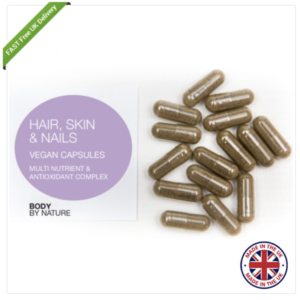
Body By Nature Supplements offers a Hair, Skin & Nails vegan supplement in a 30 Eco Pack format. The product is positioned as a multi-nutrient formulation and highlights ingredients such as:
- MSM (methylsulfonylmethane)
- Vitamin B5 (as calcium d-pantothenate)
- Vitamin C (from acerola cherry)
- Bilberry extract
- Beta glucan (from Saccharomyces cerevisiae)
- Tomato extract (providing lycopene)
- Maritime pine bark extract
- Silica (from horsetail extract)
- Cocoa extract (providing flavanols)
- Lutein (from marigold extract)
- Astaxanthin
- Zinc citrate
- Beta-carotene (from Dunaliella salina)
- Selenium (from seleno L-methionine)
- Iodine (from kelp extract)
- Copper citrate
- Biotin (vitamin B7)
It also notes that calcium and iodine are provided by lithothamnium calcareum (a wholefood seaweed) which naturally contains trace minerals.
If you want to view the product page directly, here it is: https://www.bodybynaturesupplements.com/product/hair-skin-nails-vegan-30-eco-pack?search=Hair%2C+Skin
Who is this type of supplement best for?
A hair, skin and nails vitamin can be a good fit if you:
- Want to support hair strength and appearance from within
- Have brittle nails or slow nail growth
- Want antioxidant support for skin health
- Prefer a vegan supplement format
- Want a simple daily routine (one capsule with food)
It can also be a helpful option during times when your body’s demands increase—busy periods at work, seasonal changes, or when your diet is less consistent.