


Lower Fat – Meat from grass-fed cattle is much lower in fat, and therefore lower in calories. A 6-ounce steak from a grass-finished animal has almost 100 fewer calories than the same sized-piece from a grain-fed animal. If, like the average American, you eat about 67 pounds of beef a year, switch to grass-fed beef and you’ll save nearly 18,000 calories a year.
Grass Fed Beef Benefits to Consumers
- Lower in total fat
- Higher in beta-carotene
- Higher in vitamin E (alpha-tocopherol)
- Higher in the B-vitamins thiamin and riboflavin
- Higher in the minerals calcium, magnesium, and potassium
- Higher in total omega-3s
- A healthier ratio of omega-6 to omega-3 fatty acids (1.65 vs 4.84)
- Higher in CLA (cis-9 trans-11), a potential cancer fighter
- Higher in vaccenic acid (which can be transformed into CLA)
- Lower in the saturated fats linked with heart disease
Why grass fed beef
Omega-3 Fatty Acids – Omega-3 fatty acids are fats that are essential to human health. Sixty percent of the fatty acids in grass is omega-3, which is formed in the chloroplasts of green leaves. Grass-fed cattle can contain as much as two-to-four times more omega-3 fatty acids than grain-fed animals.
At the same time, a high ratio of omega-6 to omega-3 fatty acids has been linked with an increased risk of cancer, cardiovascular disease, allergies, depression, obesity, and autoimmune disorders. A ratio of four to one or lower is considered ideal, Grain-fed beef has a much higher ratio of omega-6 to omega-3 fatty acids than wild game or grass-fed beef. In grass-fed beef the ratio is approximately 2 to 1, while the ratio in grain-fed beef is more than 14 to 1.
More Vitamins – In humans vitamin E is linked with la lower risk of heart disease and cancer. Meat from grass-fed cattle is higher in vitamin E.; as much as four times higher in vitamin E than meat from feedlot cattle.(4)
Rich source of CLA – Meat from grass-fed animals is the richest known source of “conjugated linoleic acid” or CLA. Grass-fed cattle have been found to produce 2 to 5 times more CLA than cattle fed high grain feedlot diets. In laboratory animals, a diet containing even a small amount of CLA greatly reduced cancerous growths.
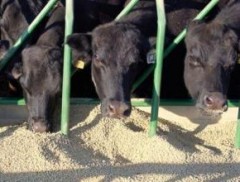
That lovely image of a herd of cattle happily munching away and contentedly chewing their cud is mostly a figment of your imagination. Over the last 70 years, the beef industry has evolved into an intense, industrial enterprise designed to put as much weight on animals as fast as possible and get the resulting meat to market as quickly as possible.
That lovely image of a herd of cattle happily munching away and contentedly chewing their cud is mostly a figment of your imagination
To do that, beef cattle – who are by nature ruminants (grass eaters) – are hustled off the pasture where they spent their first six months of life to spend the next six to eight months packed into confined animal feeding operations (CAFOs) with no green pasture in sight. In those feedlots, they are fed grain – lost of grain – to bring them up to the target weight for slaughter. Since it takes as much as 7 pounds of grain (corn, barley, soybeans, and other grain) to develop a pound of meat and those cattle gain about 3 pounds a day, that’s a lot of feed.