

Most of us don’t think much about our eyes until something feels off: blurry vision after screen time, dry or irritated eyes, headaches, or struggling to see clearly at night.
The good news is that your eyes are incredibly responsive to lifestyle basics (sleep, hydration, not smoking, managing blood sugar, wearing sunglasses). And yes — certain nutrients have solid evidence behind them when it comes to long-term eye support.
But the supplement world is noisy, and not every claim is backed by science.
In this Body by Nature Supplements guide, we’ll break down what’s actually supported by research, what “proven” really means in this context, and how to choose an eye health supplement that makes sense.
Important note: This article is educational and not medical advice. If you have sudden vision changes, eye pain, flashes/floaters, or ongoing concerns, see an optician/GP promptly.
What does “proven to protect vision” mean?
When we talk about nutrients being “proven,” we usually mean one of the following:
- Evidence that a nutrient supports normal eye structure and function
- Evidence that a specific combination of nutrients helps reduce risk of progression in certain eye conditions (most famously age-related macular degeneration)
- Evidence that people who consume more of a nutrient have better long-term eye outcomes
No supplement can guarantee you’ll never develop an eye condition — but the right nutrients can support your eyes’ natural defences.
1) Lutein + Zeaxanthin: the “macula pigments” with the strongest support
If you’ve researched eye nutrition at all, you’ve probably seen lutein and zeaxanthin mentioned. These carotenoids are concentrated in the macula (the central part of the retina responsible for sharp, detailed vision).
They’re often described as acting like internal “blue light filters” and antioxidants.
Why they matter:
- They help protect retinal tissue from oxidative stress
- They support macular pigment density (linked with visual performance)
If you’re looking for an eye health supplement, lutein and zeaxanthin are two of the most evidence-backed ingredients to look for.
2) Omega-3 (DHA/EPA): retina structure + dry eye support
Omega-3 fatty acids, particularly DHA, are structural components of the retina. Omega-3s are also widely used for inflammation balance and are commonly discussed in relation to dry eye symptoms.
Omega-3 may be helpful if you:
- Spend long hours on screens
- Experience dry, gritty, or irritated eyes
- Want broader brain/heart support alongside eye support
Omega-3 isn’t a “magic vision pill,” but it’s a strong foundational nutrient that can complement an eye health supplement routine.
3) Vitamin A: essential for night vision (but don’t megadose)
Vitamin A plays a key role in the visual cycle and is essential for low-light (night) vision.
True vitamin A deficiency is uncommon in many developed countries, but intake can still be suboptimal if diet quality is low.
Important caution: vitamin A is fat-soluble, and excessive supplementation can be harmful. This is one nutrient where “more” is not better.
If you’re considering an eye health supplement that contains vitamin A, you want sensible doses — and ideally, a product designed for daily, long-term use.
4) Vitamin C + Vitamin E: antioxidant support for eye tissues
Your eyes are exposed to light and oxygen constantly — which means oxidative stress is part of normal eye ageing.
Vitamins C and E are antioxidants that help protect cells from oxidative damage. They’re often included in comprehensive eye formulas because they support overall tissue health.
You’ll also find these nutrients in many “eye health” dietary patterns: colourful fruit, vegetables, nuts, and seeds.
5) Zinc: supports retinal health and vitamin A transport
Zinc is involved in many enzyme systems and plays a role in retinal health. It’s also important for transporting vitamin A from the liver to the retina.
Zinc is one of the key nutrients that appears in well-known eye nutrition research combinations.
However, zinc can cause nausea in some people on an empty stomach, and high-dose zinc isn’t appropriate for everyone long-term.
If your eye health supplement contains zinc, it’s best taken with food, and you should avoid stacking multiple zinc-containing products unless you’ve checked your totals.
6) B vitamins: supportive for overall nerve health
B vitamins support nervous system function and energy metabolism. While they’re not the “headline” nutrients for eye health in the way lutein/zeaxanthin are, they can still be supportive — especially if your diet is inconsistent or you’re managing high stress.
If you experience fatigue and eye strain together, it’s worth considering whether your eye symptoms are partly driven by lifestyle load (sleep debt, stress, dehydration) rather than just “eye nutrients.”
What about blueberries, bilberry, and “blue light” gummies?
You’ll often see berry extracts marketed for vision. They contain antioxidants, and they can be part of a healthy diet.
But when it comes to choosing an eye health supplement based on the strongest evidence, the most consistently supported ingredients are still lutein/zeaxanthin, omega-3s, and key antioxidants/minerals.
That doesn’t mean berry extracts are useless — it just means they’re usually “nice extras,” not the core.
How to choose the right eye supplement (without wasting money)
Here’s a practical checklist when shopping for an eye health supplement:
- Look for lutein + zeaxanthin as a core
- Consider omega-3 if dryness, screen time, or inflammation balance is a priority
- Prefer balanced, daily doses over extreme megadoses
- Choose products that fit your real routine (you’ll only benefit if you take them consistently)
A simple routine for modern eye stress (screens + busy life)
If you want a straightforward plan:
- Daily omega-3 with meals
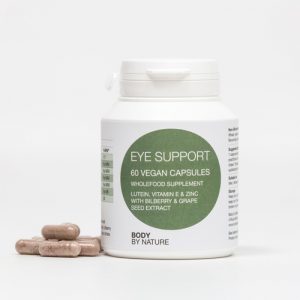
- A daily eye formula featuring lutein + zeaxanthin
- Hydration + regular screen breaks (20-20-20 rule: every 20 minutes, look 20 feet away for 20 seconds)
Final thoughts
Your vision is worth protecting — and the best approach is a blend of lifestyle basics plus targeted nutrition.
A quality eye health supplement can support your eyes’ natural defences, especially when it includes proven nutrients like lutein, zeaxanthin, omega-3s, and antioxidant support.