



Candida
There are more micro-organisms in the gastrointestinal tract than there are cells in the whole of the human body – a staggering fact and one that highlights the
importance of making sure that there is a healthy balance between the ‘friendly’ and ‘undesirable’ micro-organisms that populate this area of the body. Opportunistic
pathogens, such as Candida, may in normal circumstances be a harmless part of our intestinal flora. However, gastrointestinal and other symptoms arise when overgrowth
of this fungus occurs, usually as a result of stress, antibiotics, poor diet or other factors.
What is Candida?
The term ‘Candida’ usually refers to the species Candida albicans, a yeast-like fungus and single-celled organism. In the gut, if the opportunity arises, Candida albicans can
rapidly multiply and outnumber the desirable native flora, adopting its hyphal form and growing long branches which invade the cells of the intestinal lining.
The resultant overgrowth and toxins it releases (including acetaldehyde) can irritate and damage the cells of the gut wall, creating inflammation and triggering increased
intestinal permeability (or leaky gut), and allowing undigested food molecules and other antigens to pass into the bloodstream. Leaky gut has been linked to various
health concerns, including allergic reactions and auto-immune conditions. Candida albicans is also responsible for the class of infections described as ‘thrush’,
involving the skin or mucous membrane linings of the mouth, throat, vagina or urethra.
Common forms of Candida:
• Thrush – this is the common name for a mouth or genito-urinary tract infection caused by the Candida albicans yeast. It affects moist surfaces around
the lips, inside the cheeks, on the tongue and palate or in and around the vagina. Thrush is common in people with diseases such as cancer and AIDS,
which both suppress the immune system. Thrush can develop in people with normal immune systems, too, particularly in people with diabetes or longlasting
irritation from dentures
• Cutaneous (skin) candidiasis – Candida can cause skin infections, most commonly in areas of skin that receive little ventilation and are unusually
moist. Some common sites include the ‘nappy’ area; the hands of people who routinely wear rubber gloves; the rim of skin at the base of the fingernail,
especially for hands that are exposed to moisture; areas around the groin and in the crease of the buttocks; and the skin folds under large breasts
• Oesophagitis – Candida infections of the mouth can spread to the oesophagus, causing oesophagitis. This infection is most common in people
with AIDS and people receiving chemotherapy for cancer
Those at risk of Candida
Candida overgrowth occurs when normal immune system defences are weakened by stress, illness or poor diet (for example, diets high in refined carbohydrates
and sugars and low in essential micronutrients). Chronic stress is known to negatively impact the immune system and is frequently accompanied by poor diet;
this combined with inadequate friendly bacteria provides Candida with the ideal environment in which to thrive.
Factors that can contribute to Candida overgrowth include:
• Eating a diet high in refined carbohydrates and sugar
• Consuming a lot of alcohol
• Living a high-stress lifestyle
• Taking antibiotics, as these reduce levels of friendly bacteria thus giving Candida an opportunity to take their place
• Taking certain prescription medications which may predispose to overgrowth. These include oral contraceptives, hormone replacement therapy, glucocorticoid therapy and proton pump inhibitors (PPIs)
• Hormonal changes, for example, as occur during pregnancy Thrush is also more prevalent for those wearing synthetic undergarments, including
tights. Recurrent infections may be linked to sexual partners, therefore ensuring partners are free of symptoms is essential to reduce the risk of reinfection.
Common signs and symptoms of Candida overgrowth
Candida albicans produces toxins, including acetaldehyde, which can result in a wide range of symptoms. The most commonly experienced are heavy bloating and alternating diarrhoea and constipation. Additional symptoms presented may include:
• Skin and nail fungal infections, such as athlete’s foot or toenail fungus
• Feeling tired and worn down, or suffering from chronic fatigue or fibromyalgia
• Digestive issues such as acid reflux, bloating, nausea, diarrhoea and
constipation
• Difficulty concentrating, poor memory, lack of focus, ADD, ADHD and brain fog
• Skin issues like eczema, psoriasis, hives and rashes
• Irritability, mood swings, anxiety or depression
• Vaginal infections or urinary tract infections (e.g. recurrent cystitis)
• Severe seasonal allergies or itchy ears
• Strong sugar and refined carbohydrate cravings Candida albicans has also been linked to the development of autoimmune diseases such as coeliac disease, Hashimoto’s thyroiditis, rheumatoid arthritis, ulcerative colitis, lupus, psoriasis, scleroderma and multiple sclerosis.
Diagnosis
With such wide-ranging symptoms, it is easy to see why diagnosis (in particular, self-diagnosis) is difficult. Sometimes doctors will order both a stool test and an
antibodies test to obtain a fuller picture of what is happening in both the digestive and immune systems. Referring to the GP is always recommended to ensure other
health conditions are not overlooked. Stool tests: As well as via the GP, testing for Candida is available in private laboratories. The more comprehensive tests available also include testing for parasitic infection, a very common issue which can produce very similar symptoms. The most frequent source of parasitic infections includes pets, farm animals and foreign travel.
Blood tests:
The immune system produces IgG, IgA and IgM antibodies in response to a Candida infection. The levels of each of these antibodies can signify that a Candida overgrowth
is currently present, or has been present in the recent past. This is the test most likely to be ordered by medical professionals. However, it tends to be less reliable than a
stool analysis. Urine tests: Organic acid tests can identify imbalances in the gut and likely pathogenic organisms. For example, where yeasts are present levels of tartaric acid, citramalic acid and arabinose may be raised. These tests are available privately through a nutritional therapy practitioner.
Anti-Candida Diet
Your client has reduced sugar, sugary foods, fungus-related foods, fermented foods and many more foods from their diet, so why has this elimination diet
not eradicated these pervasive fungi? The traditional anti-Candida diet with no sugar, fruit or yeast may be difficult for people to continue long-term. Candida fungi are capable of withstanding long periods of reduced food availability, and in response to this diet, may reduce in number and become less active. Upon reintroducing the sugars and refined carbohydrates the fungi will re-establish, resulting in a return of symptoms. Those continuing to follow strict exclusion diets may be surprised by the adaptability of the Candida fungi to switch to protein digestion as its food source when carbohydrates and sugars have been eliminated. When this stage is reached it may be impossible to eradicate the
overgrowth of Candida safely by dietary means alone. For a number of reasons, the traditional anti-Candida diet may be an outdated approach and the focus now is on supporting the immune system and rebalancing the gut flora. Certainly, eating sugary foods (including fruit juice) is a bad idea as it will suppress the immune system (as well as having many other negative health effects). Fruit, however, does not need to be totally excluded – one to two portions per day of low sugar fruits such as berries, plums, apples or pears can be eaten.
The diet should be rich in natural fibre and complex carbohydrates, as found in vegetables, low-sugar fruits, nuts, seeds with modest amount of beans. Reducing the dietary intake of refined sugars and carbohydrates is beneficial for the immune system. Preservatives, additives, processed and highly refined foods should be avoided as much as possible.
Dairy products provide a high level of lactose (milk sugar), so reducing intake whilst eradicating Candida can be helpful. Fermented and yeast containing foods are frequently removed from an anti-Candida diet. Whilst reducing bread and processed food is a healthy option, it should be remembered that yeasts are not used as food by Candida albicans and will not increase Candida colonisation. Fermented and yeast containing foods, therefore, should not be a problem for Candida sufferers:
the confusion often arises where food intolerance is also present and the individual has become sensitised to yeast – and as a result reacts to yeasts and anything with
a similar cell structure. This is a common situation when the gut wall has become compromised.
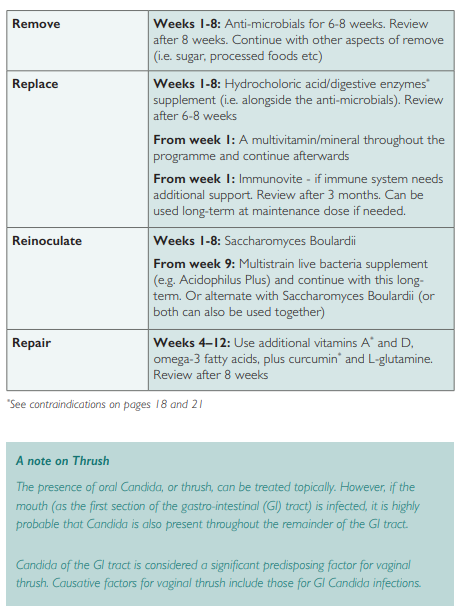
(developed by Dr Jeffrey Bland)
Remove, Replace, Reinoculate, Repair and Rebalance
Functional medicine practitioners use a 5-step plan to manage Candida overgrowth and heal the gut. This programme involves identifying and removing dietary and
lifestyle factors that may be damaging the gut, replacing missing factors and adding in gut healing nutrients for repair. Identifying and understanding potential causative and maintaining factors is important for the successful resolution of Candida overgrowth. Consider factors discussed such as diet, lifestyle, predisposing health conditions and medications. Candida eradication can result in some unpleasant symptoms created during dieback of the Candida fungus: we would therefore recommend that this is not undertaken during pregnancy, but instead forms part of the preconception healthy diet and lifestyle plans. Rapid eradication may not be appropriate for those with serious
illness or recuperating: for those, we suggest a more gentle support programme is considered.
Irritable Bowel Syndrome
Irritable Bowel Syndrome (IBS) is a common condition, described as a functional disorder affecting a wide age range of men and women, including young adults. IBS is
twice as common in women. The cause is unknown, although onset can sometimes be traced to infections of the gastro-intestinal tract. Many clients and practitioners
also note that the onset of symptoms can be linked to life events or periods of stress; IBS symptoms are frequently seen to increase during periods of stress and anxiety.
The medical approach to the condition focuses on symptom relief, with prescription drugs to reduce pain and intestinal spasms, anti-diarrhoea preparations, laxatives for
constipation, and anti-depressants. The latter is controversial, IBS sufferers confirm that the symptoms of their condition lead to low mood and an increase in anxiety,
few appear to consider the IBS a result of depression, although medication seems to benefit symptoms for some.
IBS should not be confused with IBD, which refers to inflammatory bowel disease which includes conditions such as ulcerative colitis and Crohn’s disease.
Ulcerative colitis – In this condition, small ulcers and inflammation develop on the inside lining of the colon and sometimes the rectum, with symptoms of urgent and
bloody diarrhoea, pain and continual tiredness. When symptoms are located only in the rectum, this is referred to as proctitis.
Crohn’s disease
Inflammation, deep ulcers and scarring to the wall of the intestine. This often occurs in patches, affecting anywhere along the gastro-intestinal tract from
the mouth to the anus. The areas most commonly affected are the small intestine and colon. The main symptoms are abdominal pain, urgent diarrhoea, tiredness and
weight loss. The inflammatory nature of both of these conditions can, in some, cause symptoms of inflammation in the joints, skin and eyes. An additional condition included within IBD is the less familiar microscopic colitis, usually considered less severe than ulcerative colitis and Crohn’s disease.
Symptoms of Irritable Bowel Syndrome
Intermittent pain Frequently described as colicky, or spasms of pain, may occur in different parts of the abdomen, this pain may ease after the passage of wind or a stool. Bloating and general discomfort in the abdomen are common, which can unfortunately be aggravated by some medications used during treatment. Nausea and loss of appetite may also be present.
Diarrhoea
For some, the symptoms of irritable bowel are diarrhoea requiring frequent, urgent visits to the toilet. This may be more severe in the mornings after waking, after eating
or drinking, or during stressful and anxious moments. Constipation Presents a different side to IBS. A frequent sensation is one of needing the toilet, yet unable to pass a stool, or a sense of incompletion during a toilet visit.
Alternation
IBS sufferers frequently experience alternate constipation and diarrhoea. Mucus may be mixed with the stool, and stools may become small and pellet like or watery.
Diagnosis
Diagnosis is usually carried out from the symptoms demonstrated by the patient, or after other conditions have been excluded by tests and investigations. Blood samples
are frequently taken to rule out conditions such as anaemia, inflammation and the presence of antibodies. It is possible that we may see blood tests for irritable bowel
used in future diagnosis, as research reported in 2009 (which assessed serum biomarker patterns) demonstrated a 70% accuracy for test results.
The following may all produce symptoms which can be confused with IBS:
• Gastritis – an inflammation of the stomach lining which can be caused by a variety of factors, including excess alcohol, tea, coffee, fizzy drinks, prolonged excessive intake of NSAIDs (non-steroidal anti-inflammatory drugs) and the infection Helicobacter pylori
• Excessive use of laxatives
• Excessive use of antacid preparations
• Reduced presence of protective bacteria due to infections and antibiotic use
• Fungal infections eg Candida
• Parasitic infections
Conditions which may also produce similar symptoms are:
• Lactose Intolerance
• Coeliac disease
• Pancreatic insufficiency
• Diverticular disease Stool testing can be used to identify bacterial, fungal and parasitic infections or gut dybiosis as a trigger. If fungal infections or parasites test positive, these will need to be eradicated with prescription medications or specific gastro-intestinal targeted products.
Clients will frequently have received their diagnosis of IBS from a GP or Consultant, if this has not taken place, or you have further concerns, clients should be referred back for further investigation and medical diagnosis. Self-prescribed medications.
Many clients regularly take self-prescribed medication for their symptoms to control both diarrhoea and constipation. These are likely to be producing their own sets of symptoms: for example, anti-diarrhoea medication can produce strong cramping pains. Regular use of laxatives for constipation can eventually become a necessity by
further increasing the sluggish tendency and dependence of the bowel. Overuse of laxatives can result in anal leakage, yet not resolve the issues of constipation. For those clients self-medicating, a gradual reduction may be possible once symptoms improve. Those taking prescribed medication should not amend their dose or frequency without consulting their prescribing medical practitioner.
Additional Considerations Digestive function may be poor due to low levels of hydrochloric acid which can result in a variety of symptoms. Overuse of antacid preparations or proton pump inhibitors can reduce hydrochloric acid levels.
Blood tests for iron deficiency may also be useful, as low hydrochloric acid levels are linked with iron deficiency impacting on iron absorption and other essential nutrients.
Pancreatic insufficiency can also reduce the presence of digestive enzymes impacting on the breakdown and digestion of food.
Gluten sensitivity, other food sensitivities and intolerances Animal studies have shown the potential for IBS symptoms to be linked to gluten sensitivity
. Some people who have been diagnosed with irritable bowel syndrome
(IBS) report a lessening of symptoms when they follow a gluten free diet; and although good quality studies are limited the American College of Gastroenterology concludes that a gluten-free diet holds promise for IBS sufferers
.
Laboratory tests demonstrated elevated IgG (Immunoglobulin) to wheat, beef, pork, lamb and soya bean in IBS patients, IgE response was low and found in only a small
number of patients
. IgG antibodies are a delayed hypersensitivity reaction, and is the response frequently seen in food sensitivity reactions. IgE antibodies are referred to as a Type 1 immediate hypersensitivity reaction, the response found in allergies.
SIntestinal permeability is considered an important factor in food intolerance, and allergy research has confirmed the presence of small intestinal permeability in diarrhoea-predominant IBS sufferers. Those included in the research whose IBS onset was not considered to be linked to infection, appeared to have an increased defect
in permeability
. It has been established that gluten increases intestinal permeability even in healthy individuals, through increasing the expression of the protein zonulin 6
.
Colonic biopsies have also demonstrated increased permeability of the colon in IBS patients: the increased permeability correlated with the severity of abdominal pain7
.
If you suspect allergies or intolerances are involved in the client’s symptoms, then testing may be appropriate. If clients are excluding specific foods from their diets, this can potentially impact on test results, leading to inaccuracies. Excluded foods should always be considered when reviewing test results.
Nutritional Approaches to Irritable Bowel Syndrome Sugar, sweeteners, refined and processed foods that lack natural fibre may be responsible for symptoms of bloating, pain, flatulence, diarrhoea and constipation. There can be no one nutritional approach for IBS as symptoms vary. An ideal start is for clients to record a diary of their food intake plus a detailed diary of symptoms and any lifestyle events that are noted to occur during periods of symptom aggravation. This information may provide evidence for food or stress triggers and assist in establishing the most suitable support.
Fibre
Over the years the medical recommendation for increased fibre in the diet has changed from ‘promoting’ to ‘avoiding’ to ‘may be suitable for some’. Some clients report medical advice to eat a ‘junk diet’ to combat symptoms, the lack of fibre in this diet may well improve some clients’ symptoms in the short term; long term implications for health of the digestive system and general health of the client are a
concern for this method.
Introducing large quantities of fibre (eg from grains, nuts/seeds and some vegetables)
to clients with IBS is likely to cause problems, particularly if the diet previously contained highly refined foods.
A gradual change to the diet is essential, introducing those foods which are easier to digest in the initial changes and in small portions. Clients frequently perceive bran as
the only source of fibre and a healthy option: bran can be an undesirable irritant on the bowel, is implicated in nutrient losses and will contain gluten so it is best avoided.
For those who experience constipation, adequate fibre, fluids and regular exercise can often result in improved transit time, therefore reducing bloating, flatulence and
pain.
Soluble fibre is often the best fibre to introduce and is provided by fruit, vegetables, pulses and oats – although these also contain some insoluble fibre. Introducing these
foods, cooked initially, may increase tolerance by providing them in an easier to digest form. A gradual increase in both variety and quantity is likely to achieve more successful results. For those who seem unable to tolerate these foods look at and compare those that are excluded on the FODMAP diet as this may be relevant.
Psyllium is classed as a soluble fibre which is frequently used as a laxative and may be beneficial in those with symptoms of constipation. Due to the ability of psyllium to absorb fluids, it is also considered relevant for those with symptoms of diarrhoea.
It is important to take psyllium with adequate water – 200 to 250 ml of water for each heaped teaspoon.
Insoluble fibre is more likely to result in digestive symptoms. The skin and pips of fruit and vegetables can be considered as insoluble, so may be best removed in the initial stages. Legumes fall into both categories and are problematic for some and best avoided during the early stages. Grains such as wheat and rye and wholegrain foods such as rice, pasta, bread and nuts are high in insoluble fibre.
Remember when increasing dietary intake of fibre to ensure adequate intake of fluids, preferably water. Fluid intake is frequently low in patients who experience constipation, and those with excessive diarrhoea can also become dehydrated.
Recommendations for the client to reduce their intake of fizzy drinks, alcohol, tea and coffee would be beneficial, ideal replacements are water and herb teas: peppermint, fennel and chamomile tea provide digestive calming benefits.
Food Exclusions;
If clients are excluding foods due to an actual or suspected intolerance it is important to ensure that suitable nutrient replacements are found particularly when dealing
with the major food groups such as grains and dairy to ensure that nutritional deficiencies are not created.
Gluten grains are frequently noted as exacerbating symptoms and a trial elimination should be considered. Gluten grains include wheat, barley, rye and spelt so this
means removing bread, pasta, cous cous, beer, tabbouleh, freekeh and flour products. Hidden less obvious sources of gluten include – some types of soy sauce (Tamari is gluten free), gravies, sauces, soups, sushi and fried foods in restaurants. It is therefore essential to check food labels and to ask in restaurants.
Lactose intolerance may give rise to diarrhoea. Dairy also contains a number of proteins eg casein which may also trigger gut symptoms (as well as non-gut related
symptoms). Other foods can also trigger IBS symptoms.
FODMAPS
FODMAP carbohydrates are particular types of carbohydrates and fibres found in certain grains, fruits, vegetables, dried peas and beans, milk products and processed foods and drinks. FODMAP stands for Fermentable Oligo-, Di-, Mono-saccharides and Polyols. Specifically, some of the dietary carbohydrates described by the term FODMAP are lactose, fructose, fructans, polyols and galactans. FODMAPs have several things in common:
• They are all carbohydrates
• They are sometimes poorly absorbed
• They are all rapidly fermented by the gut bacteria
• They can all disrupt the fluid balance in the gut In some people FODMAP carbohydrates are not absorbed as they should be in the small intestine, instead they pass through the far end of the small intestine and into the large intestine. There FODMAPs act as fast food for the bacteria which give off a lot of gas as they ferment the food. The gas makes the large intestine swell and bloating may be experienced. Another problem is that FODMAPs can draw fluid into the intestine ie they are osmotic. Pain and watery urgent diarrhoea can result. Indications are that for some sensitive to the effects of FODMAPs, reducing these foods can reduce symptoms such as bloating, wind, abdominal pain and altered bowel habits8
.
Some FODMAPs may be tolerated. It is the total load from all sources that causes a problem for some people. This may be from a large quantity of a single food or smaller amounts of several different FODMAP foods added together over a period of time eg over a day or days.
Please note that a low FODMAP diet involves initially restricting a considerable number of foods which some people may find very difficult; however, it is not intended to be a long-term diet. Some examples of foods to be avoided on a low FODMAP diet include:
• Fructose found in fruits, honey, high fructose corn syrup etc
• Lactose found in milk products
• Fructans found in wheat, garlic, onion and chicory etc
• Galactans found in legumes including beans, peas and lentils
• Polyols found in sweeteners containing isomalt, mannitol, sorbitol, xylitol plus stone fruits such as avocado, apricots, cherries, nectarines, peaches and plums.
After excluding high FODMAP foods for a month, foods from each FODMAP group should be reintroduced, one at a time (eg foods containing fructose, then foods containing lactose etc). During the reintroduction symptoms should be monitored and if a FODMAP group of foods causes problems then continue to eliminate this group.
Wheat, barley and rye are FODMAPs so these are eliminated on a low FODMAP diet – could the improvements seen by some people be in fact due to the elimination of gluten from the diet? Spelt, which does contain gluten, is allowed but is less widely available so may not be chosen. Diet should always be reviewed in those with digestive symptoms, not all will need to follow the more difficult FODMAP diet for improvements to be seen. For example, those with a highly refined and processed diet high in sugars and artificial sweeteners often have poor digestive function.
The 4-Step Plan for IBS (developed by Dr Jeffrey Bland) http://jeffreybland.com/
Functional medicine practitioners use a 4 step plan for IBS called the 4-R programme. This programme involves identifying and removing dietary and lifestyle factors that
may be damaging the gut, replacing missing factors and adding in gut healing nutrients for repair.
Remove – sugar, alcohol, processed foods plus any foods that are already known to cause a reaction. Other foods which often contribute to IBS include gluten, dairy and FODMAPs so eliminating perhaps gluten and dairy to start with should be considered. Other factors to remove/reduce include stress and non-steroidal anti-inflammatories (unless these have been prescribed by a medical practitioner). If there is an overgrowth of undesirable bacteria or yeast this will also need to be addressed using appropriate anti-microbials.
Replace – consider using digestive enzymes (and betaine hydrochloride if indicated) as natural production of digestive enzymes and stomach acid may be compromised in IBS. Ensuring adequate digestion of food will help with absorption and prevent undesirable bacteria from fermenting the food.
Repair – with digestive tract healing nutrients such as L-glutamine, aloe vera, curcumin, essential fatty acids and vitamins A and D. It is important this step is not overlooked – if the gut is not healed then further food sensitivities may develop and you may not see a full resolution of symptoms.
Rebalance – Live bacteria are needed to rebalance the gut flora. In addition, there may be a need for additional nutritional support – if digestion and absorption have
been compromised for some time short-term additional nutrients will be needed to address any specific needs identified, along with a good quality multivitamin and
mineral in both the short-term and for long-term maintenance.
Supplement Support using Body by nature supplements
Body by nature supplements Candida Support, Betaine & Pepsin plus a vitamin D3. It is essential that digestive function is optimal. As discussed, hydrochloric acid levels may be low (hypochlorhydria). Supplements providing hydrochloric acid in the form of betaine are available. Pancreatic enzymes released into the duodenum during digestion may also be inadequate, increasing digestive symptoms.
supplements would be contraindicated for those with a history of peptic ulcers, gastritis and hiatus hernia and may not be appropriate for those taking prescribed proton pump inhibitors.
Native Live Bacteria Research has demonstrated the benefits of probiotics in reducing inflammation and permeability of the gut and in irritable bowel syndrome12. For those in whom an imbalance of bacteria or Candida is suspected or identified the use of Saccharomyces boulardii may be recommended. This beneficial yeast has been subject to much research with positive outcomes in relation to Candida infections, bacterial infections and antibiotic-associated diarrhoea, and small trials have shown positive results in the maintenance of Crohn’s disease, Saccharomyces boulardii is used ideally in combination with a Live Bacteria supplement.. Our probiotic has been found to assist in the help with gut flora.
(1) Candida Support
(2) Betaine & Pepsin
(3) Vitamin D3
References;
1 A J Lembo, B Neri, J Tolley, D Barken, S Carroll, H Pan. Use of serum biomarkers in a
diagnostic test for irritable bowel syndrome. Alimentary Pharmacology & Therapeutics. Volume
29 Issue 8, Pages 834 – 842 2009
2 Verdu E F et al (2009) – Celiac Disease and Irritable Bowel Syndrome: The “No Man’s Land”
of Gluten Sensitivity. Am J Gastroenterol, 104, 1587 – 1594
3 Ford A C et al (2014) – American College of Gastroenterology Monograph on the
Management of Irritable Bowel Syndrome and Chronic Idiopathic Constipation. Am J
Gastroenterol 109, S2-S26
4 Zar S et al (2005) – Food-Specific Serum IgG4 and IgE Titers to Common Food Antigens in
Irritable Bowel Syndrome. Am J Gastroenterol, 100, 1550-1557
5 Dunlop S P et al (2006) – Abnormal Intestinal Permeability in Subgroups of
Diarrhoea-Predominant Irritable Bowel Syndromes. Am J Gastroenterol, 101(6), 1288-1294
6 Hollon J et al (2015) – Effect of gliadin on permeability of intestinal biopsy explants from
celiac disease patients and patients with non-celiac gluten sensitivity. Nutrients, 27;7(3), 565-76
7 Piche T et al (2009) – Impaired intestinal barrier integrity in the colon of patients with
irritable bowel syndrome: involvement of soluble mediators. Gut, 58, 196-201
8 Catsos P – IBS: Free at last! Change your carbs, change your life with the FODMAP elimination
diet. 2nd Edition
9 Madden J A J and Hunter J O (2002) – A review of the role of the gut microflora in irritable
bowel syndrome and the effects of probiotics. Br J Nutr,88 Suppl 1 S67–S72
10 Willimas E A et al – Clinical trial: a multistrain probiotic preparation significantly reduces
symptoms of irritable bowel syndrome in a double-blind placebo-controlled study. Aliment
Pharmacol & Ther, Volume 29 Issue 1, Pages 97 – 103
11 Kajander K et al (2008) – Clinical trial: multispecies probiotic supplementation alleviates the
symptoms of irritable bowel syndrome and stabilizes intestinal microbiota. Aliment Pharmacol
Ther, 1, 27(1), 48-57
12 Whorwell P J et al (2006) – Efficacy of an Encapsulated Probiotic Bifidobacterium infantis
35624 in Women with Irritable Bowel Syndrome. Am J Gastroenterol, 101, 1581–1590
13 Middleton E J R et al (2000) – Implications for Inflammation, Heart Disease, and Cancer
Pharmacol Revs, 52 no. 4.:673–751
14 Langmead L et al (2004) – Anti-inflammatory effects of aloe vera gel in human colorectal
mucosa in vitro. Aliment Pharmacol Ther, 2004; 19: 521–527
15 Guslandi M et al (2000) – Saccharomyces boulardii in maintenance treatment of Crohn’s
disease. Dig Dis Sci, 45(7), 1462-4
16 Vilela G E et al (2008) – Influence of Saccharomyces boulardii on the intestinal permeability
of patients with Crohn’s disease in remission. Scand J Gastroenterol, 43(7), 842-8
17 Lynne V McFarland (2010) – Systematic review and meta-analysis of Saccharomyces boulardii
in adult patients. World J Gastroenterol, 16(18), 2202–2222
18 Jean-Paul Buts (2009) – Twenty-Five Years of Research on Saccharomyces boulardii Trophic
Effects: Updates and Perspectives. Dig Dis Sci, 54, 15–18
19 Kotowska M et al (2005) – Saccharomyces boulardii in the prevention of
antibiotic-associated diarrhoea in children: a randomized double-blind placebo-controlled trial.
Aliment Pharmacol Ther, 1, 21(5), 583-90
20 Krasowska A et al (2009) – The antagonistic effect of Saccharomyces boulardii on Candida
albicans filamentation, adhesion and biofilm formation. FEMS. Yeast Research, 9, 8, 1312 – 1321
21 Das Graças R et al (2010) – Glutamine Supplementation Decreases Intestinal Permeability
and Preserves Gut Mucosa Integrity in an Experimental Mouse Model. J Parenter Enteral Nutr,
34, 408-413
22 Daurea A et al (2005) – Intestinal permeability and systemic infections in critically ill
patients: Effect of glutamine. CritCare Med, 33, 1125–1135