


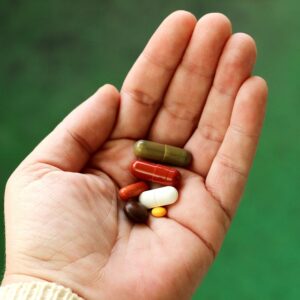
Ashwagandha is everywhere right now. Stress supplements. Sleep formulas. Gym recovery stacks. Hormone support products. It has become one of the fastest-growing ingredients in the global wellness market.
But here’s the thing — ashwagandha isn’t new. Practitioners of Ayurvedic medicine have used it for over 3,000 years. What’s new is that modern science has started proving what those practitioners understood long ago: this plant genuinely delivers.
What Is Ashwagandha?
Ashwagandha (Withania somnifera) is a small shrub native to India, North Africa, and the Mediterranean. Supplements use the root, which contains active compounds called withanolides. These compounds drive most of the plant’s therapeutic effects.
In Ayurvedic tradition, ashwagandha belongs to a category called rasayanas — substances used to promote vitality, longevity, and resilience. In modern science, it sits in a category called adaptogens. Adaptogens help the body handle physical and psychological stress without causing harm or dependency.
Stress Reduction: The Standout Benefit
The most well-supported benefit of ashwagandha is stress reduction. Specifically, it reduces the physiological impact of stress on the body.
Chronic stress drives up cortisol — your body’s primary stress hormone. Short-term cortisol spikes are useful. They help you respond to immediate threats. But chronically high cortisol causes real damage. It disrupts sleep, suppresses immune function. It interferes with thyroid hormones, promotes fat storage around the abdomen, and accelerates cellular ageing.
Ashwagandha directly targets this. Multiple clinical trials show it significantly lowers cortisol in stressed adults. A landmark 2012 study in the Indian Journal of Psychological Medicine found that participants taking 300mg of ashwagandha root extract twice daily for 60 days reported a 44% reduction in perceived stress — alongside measurable drops in serum cortisol.
This isn’t a sedative. Ashwagandha doesn’t dull your alertness or slow your thinking. It helps your body regulate its own stress response more effectively.
Sleep: Fall Asleep Faster, Stay Asleep Longer
Stress and poor sleep feed each other. High cortisol disrupts melatonin production, making it harder to fall asleep. Poor sleep then pushes cortisol higher. Ashwagandha works on both sides of this cycle.
A 2019 study published in PLOS ONE found that adults taking ashwagandha root extract for eight weeks fell asleep faster, slept longer, and reported significantly better sleep quality than the control group. They achieved this without the grogginess or dependency risks that come with pharmaceutical sleep aids.
For anyone lying awake with a racing mind, ashwagandha offers a well-evidenced, natural solution.
Physical Performance and Recovery
Ashwagandha benefits go beyond stress and sleep. Research consistently links it to improved physical performance, faster recovery, and greater muscle strength.
A well-cited study in the Journal of the International Society of Sports Nutrition found that men taking ashwagandha alongside resistance training gained significantly more muscle strength and size than the placebo group — over just eight weeks.
The mechanism connects back to cortisol. High cortisol breaks down muscle tissue and slows recovery. By keeping cortisol in check, ashwagandha creates a more anabolic environment. Your training efforts translate into better results.
It also improves VO2 max — the measure of how efficiently your body uses oxygen during exercise. For endurance athletes and anyone chasing cardiovascular fitness, that matters.
Hormonal Health
Ashwagandha supports hormonal balance well beyond cortisol regulation. Studies show it helps regulate thyroid hormone levels, which makes it relevant for people with subclinical hypothyroidism. It also supports healthy testosterone levels in men experiencing stress-related hormonal disruption.
For women, the cortisol-lowering effect has a direct downstream benefit. Chronic stress suppresses sex hormone production. By reducing cortisol, ashwagandha helps restore a healthier balance of oestrogen and progesterone. Several studies show improvements in sexual function and desire in women who supplement consistently.
How to Take Ashwagandha
Clinical research uses doses between 300mg and 600mg of standardised root extract per day. Look for a supplement that specifies its withanolide content — ideally 5% or higher. This tells you the product contains a properly standardised extract, not an underdosed raw powder.
Most people notice a difference within two to four weeks. Ashwagandha builds its effect gradually. It rewards consistency more than high doses.
The Bottom Line
Ashwagandha earns its reputation. The clinical evidence behind its effects on stress, sleep, physical performance, and hormonal health is strong. Its safety profile — backed by thousands of years of use and modern clinical data — is excellent.
If stress, poor sleep, or low energy hold you back, ashwagandha gives your body a natural, effective way to restore its own balance.
Body by Nature Supplements‘ Ashwagandha delivers a properly standardised root extract at clinically relevant doses — so you get real results, not just a label claim.