


Hormones are present in all animal products whether or not the animals have been treated with hormone supplements.
The FDA and a joint committee of the Food and Agricultural Organization and World Health Organization (FAO/WHO) state that the amount of these hormones that make it into food products is safe for eating. Hormones and steroids are given to livestock to help improve the production of dairy and beef cattle. Some hormones that may be used in dairy cows include:
Growth Hormones
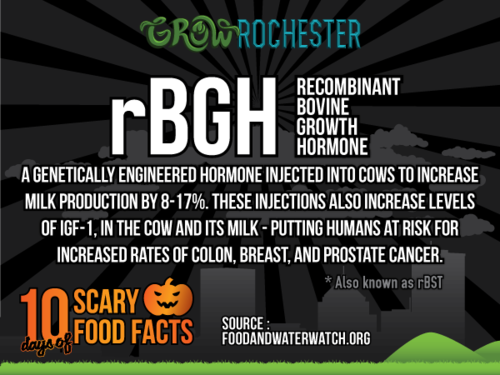
-Recombinant bovine growth hormone (rbGH)— to promote milk production (may also see it as bovine somatotropin [BST])
-Estrogen, testosterone, and progesterine—steroid hormones added to promote growth and production.
Beef cattle are often given steroid additives to increase growth and development. Common steroids include:
-Natural steroids like estradiol, testosterone, and progesterone.
-Man-mad steroids from compounds of estrogen, androgen, and progestin.
According to the European Union’s Scientific Committee on Veterinary Measures Relating to Public Health (SCVPH), the use of natural and artificial growth hormones in beef production pose a potential risk to human health. These hormones include three that are naturally occurring – Oestradiol, Progesterone and Testosterone – and three that are synthetic – Zeranol, Trenbolone, and Melengestrol. When hormones are injected into cattle, some naturally occurring hormone levels increase 7 to 20 times. The committee determined that“no acceptable daily intake could be established for any of these hormones.”
The Committee also questioned whether hormone residues in the meat of growth enhanced animals can disrupt human hormone balance, causing developmental problems, interfering with the reproductive system, and even leading to the development of breast, prostate and colon cancers.
Children, pregnant women, and developing embryos are thought to be most susceptible to negative health effects from added hormones. For example, hormone residues in beef have been examined as a cause of lower sperm counts in boys. The use of rBGH in dairy cows was linked in one study to increases in human twin and triplet births.
