

When next go on your summer holiday, one of the last things you probably think about is the sea weed littering the beach. Did you know most of that seaweed can in fact be eaten?
Please don’t just go onto the beach and start picking up bits of seaweed and eating it. It’s like reforging for mushrooms, you need a little knowledge or you could end up getting sick and that’s not what’s this is about.
Health Benefits Of Edible Seaweed
Seaweed is one of the best kept secret new super foods you can eat. For a starters, bread, crisps, soups hell, you can even eat this stuff for breakfast. Seaweed has a low GL and is high in fibre.
What makes seaweed so good for you? Seaweed is full of all the good stuff. It’s high in nutrients, low in calories. The very food that you consume is now grown in such nutrition poor soil that farmers have to replace this by using chemicals, hence the over farming of soil has given us nutrition poor fruits and vegetables.
Seaweed has another thing going for it, it is good at mopping up toxins such as Cadmium and lead, not only found in cigarette smoke but found in the air we breath due to masses of chemicals being pumped out of the chimneys from the industrial plants found in every city.
Ireland is just one of the places you can buy drinks and soups made from seaweed. A great little pickup after an illness.
Kelp is used to reduce phlegm and promotes urination. It has been claimed that Kelp also helps in the gastric qualities and even act as a hangover cure. Seaweed is high in Lignans. These are plant substances that become phytoestrogens in the body, which help to block the chemical oestrogen’s that can predispose people to cancers such as breast cancer.
Dr. Jane Teas of Harvard University published a paper saying that Kelp consumption might be a factor in the lower rates of breast cancer in Japan, and she is now researching the effects of seaweed as a natural replacement for HRT.
Edible Seaweeds In Britain
Badderlocks
Found in the north of Britain, Badderlocks grow up to 10-12 ft. in length. The midrib, the large strengthened vein along the midline of a leaf, is edible once you remove the enveloping membrane.
Irish Moss / Carrageen
The perennial can be boiled and turned into a jelly-like seaweed. Many seaweeds contain carrageenans and alginates, which frequently make their way into processed foods. You’ve probably been eating seaweed without realising it.
Tangle / Sweet Tangle
Can only be eaten during their youth, the stalks and leaves have a particular sweetness to it.
Dulse
Back in the day, this was often served along with potatoes, eaten raw or cooked, or eaten as a dry snack. The smaller ones are more edible and less leathery unlike the bigger ones.
The Japanese Have Got It Right
In Japan they use seaweed as the delicious, versatile and healthy food that it is. Seaweed is also filling as a breakfast as it keeps you away from the irregular snacking until lunchtime.
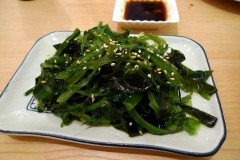
Seaweed salad is a healthy Japanese dish that’s sustainable and packed with nutrients such as fibre, vitamins and minerals such as iron.
Over 600 Japanese recipes include seaweed.